
Velocity Kings: The Definitive Guide to the Fastest Cars in the World (2025 Edition)
The pursuit of velocity is more than just physics; it is a primal obsession that has driven the automotive industry since
the first combustion engine sputtered to life. Having spent the last ten years analyzing powertrain architectures, track telemetry, and the shifting tides of the global car market, I can tell you that 2025 represents a massive paradigm shift. We are no longer just looking at internal combustion engines (ICE) gasping for air at the limit; we are witnessing a violent collision between traditional mechanical engineering and the silent, brutal torque of electrification.
Navigating the stratosphere of automotive performance requires looking past the glossy brochures. It requires understanding drag coefficients, tire technology, and the sheer audacity required to keep a vehicle planted on the tarmac at 300 mph. For the high-net-worth individual or the dedicated enthusiast, the fastest cars in the world today are not just vehicles—they are appreciating assets, triumphs of material science, and the ultimate status symbols.
In this comprehensive analysis, we will break down the current kings of the road, dissect the engineering that propels them, and look at the market reality of owning these land missiles.
The Theoretical Sovereign: Koenigsegg Jesko Absolut
When discussing the fastest cars in the world, the conversation inevitably turns to Ängelholm, Sweden. Christian von Koenigsegg does not build cars; he engineers solutions to problems most manufacturers haven’t even encountered yet. The Jesko Absolut is the “top speed” variant of the Jesko track weapon, and it is currently the reigning monarch of theoretical velocity.
The heart of this beast is a flat-plane crank 5.0-liter twin-turbo V8. When running on E85 biofuel, this unit delivers a mind-bending 1,600 horsepower. However, power is only half the equation. The “Absolut” designation means the rear wing has been deleted in favor of two fighter-jet-inspired fins, dropping the drag coefficient to a slippery 0.278 Cd.
While the simulated top speed suggests capabilities exceeding 310 mph (roughly 500 km/h), the real-world limitation remains finding a stretch of tarmac—like a closed highway in Nevada or a runway in Florida—long enough to prove it. However, with a 0-400-0 km/h record already shattered in under 28 seconds, the Jesko Absolut has proven its powertrain is not just for show. For collectors looking into supercar financing for such a vehicle, the Jesko remains the ultimate “what if” machine, holding its value through sheer exclusivity and engineering dominance.
The American Retaliation: SSC Tuatara
Across the Atlantic, the American spirit of speed is alive and well. The SSC Tuatara had a rocky introduction to the public eye regarding verified speed runs, but let’s look at the hard data verified in 2022. Hitting a confirmed 295 mph at the Kennedy Space Center proves that American engineering belongs at the table of the fastest cars in the world.
The Tuatara utilizes a Nelson Racing Engines 5.9-liter twin-turbo V8 that screams to an 8,800 rpm redline. On ethanol, it pushes 1,750 horsepower. Unlike its European counterparts that often rely on all-wheel drive and heavy hybrid systems, the Tuatara sends all that violence to the rear wheels. This makes it a driver’s car in the purest, most terrifying sense.
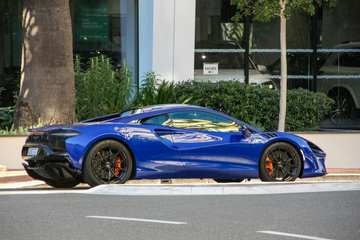 For those scouting exotic car dealerships in Miami or Los Angeles, spotting a Tuatara is a rarity. Its design, penned by Jason Castriota, mimics the fighter jets often seen in American skies, ensuring that the air flows around the car rather than fighting against it. It is a testament to the fact that you don’t need a massive corporate budget to break records; you need obsession.
The Electric Disruptor: Yangwang U9 Xtreme
If you haven’t been paying attention to the Asian market, you are missing the biggest story of 2025. The Yangwang U9 Xtreme has officially put the internal combustion guard on notice. Hitting 308 mph on a German test track is not just a win for BYD’s luxury arm; it is a declaration of war on the status quo of the fastest cars in the world.
The U9 Xtreme utilizes the “e4” platform—four independent electric motors delivering a combined 3,000 horsepower. But the real story here is the 1,200-volt architecture. In the EV world, voltage equals efficiency and thermal management. By running at such high voltage, the U9 can dump massive current into the motors without overheating the cabling, a common Achilles heel in high-performance EVs.
With a price point hovering around the equivalent of $250,000 to $300,000 USD (converted), it also disrupts the market economics. Usually, this level of speed requires a multi-million dollar entry fee. The U9 brings hypercar performance to a price bracket usually reserved for “entry-level” supercars, shaking up the landscape for luxury auto loans and insurance underwriters who now have to classify a 300-mph vehicle available at a fraction of a Bugatti’s cost.
The W16 Swan Song: Bugatti Mistral
Bugatti has synonymous associations with the phrase “fastest cars in the world.” While the Chiron Super Sport 300+ broke the barrier, the Bugatti Mistral serves a different purpose. It is the final road-going model to house the legendary W16 quad-turbo engine.
As a roadster, the Mistral claims the title of the fastest open-top production car, targeting 261 mph (420 km/h). Engineering a convertible to handle these speeds is infinitely more complex than a coupe due to the loss of structural rigidity and the turbulent air entering the cabin. Bugatti’s engineers have reinforced the monocoque without adding excessive weight, ensuring the 1,578 horsepower can be deployed safely.
Owning a Mistral is about preserving history. As we transition to hybridization, the maintenance of these W16 engines will become a specialized industry unto itself. Owners should expect high-performance auto insurance premiums to reflect the irreplaceable nature of this engine block.
The Hybrid Future: Bugatti Tourbillon
Replacing an icon is never easy, but the Bugatti Tourbillon does so by embracing the future. It discards the W16 for a naturally aspirated V16 paired with three electric motors. This isn’t a Prius hybrid system; this is F1-grade energy deployment.
The total output sits at 1,800 horsepower. The electric motors fill the “torque gaps” of the combustion engine, providing instant acceleration while the V16 screams to 9,000 rpm. This car represents the “Holy Trinity” of modern hypercar requirements: mechanical soul, electric efficiency, and artisanal luxury.
For the ultra-wealthy in hubs like New York or Dubai, the Tourbillon is the new standard. It accelerates to 60 mph in 2.0 seconds flat. When discussing the fastest cars in the world, the Tourbillon ensures Bugatti remains the heavyweight champion of grand touring hypercars.
American Muscle Evolved: Hennessey Venom F5
John Hennessey has been modifying cars to go faster than they should for decades, but the Venom F5 is a bespoke creation built from the ground up in Texas. The goal? To be the absolute fastest car in the world, period.
The “Fury” engine is a 6.6-liter twin-turbo V8 producing 1,817 horsepower. The car is named after the highest rating on the tornado scale, and it lives up to the moniker. Hennessey’s approach is brute force meets aerodynamic precision. There are no hybrid batteries weighing it down. It is a lightweight carbon fiber chassis with a nuclear reactor of an engine attached.
While verified top speed runs are ongoing, the target is exceeding 300 mph (482 km/h) in two directions. For collectors, the Venom F5 offers a raw, analog experience that is disappearing from the market. It is loud, vibrates with intensity, and requires a driver who respects the throttle.
The Electric Benchmark: Rimac Nevera R
Mate Rimac is the wunderkind of the electric hypercar world. The original Nevera redefined acceleration, but the Nevera R takes it further. With 2,107 horsepower, this is not just one of the fastest cars in the world; it is arguably the quickest accelerating device on four wheels.
The genius of the Nevera R lies in its torque vectoring. The system monitors each wheel 100 times per second, adjusting power delivery to ensure perfect traction. This allows it to corner at speeds that defy physics. It hits 60 mph in 1.74 seconds. Let that sink in. By the time you read that sentence, the Nevera R is already at highway speeds.
For tech-focused buyers, perhaps those in Silicon Valley looking for the ultimate EV, the Nevera R is the apex. It also presents a unique proposition for electric vehicle charger installation at home; charging a 120kWh battery requires industrial-grade infrastructure to be done quickly.
 Japanese Precision: Aspark Owl
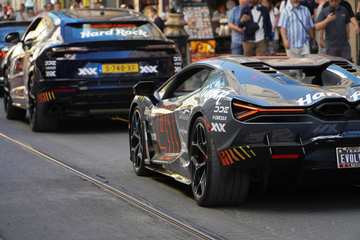
The Aspark Owl is the dark horse of the industry. Hailing from Japan, this low-slung electric hypercar focuses on one thing: acceleration. It was the first to break the 1.7-second barrier for 0-60 mph.
Standing less than 39 inches tall, it cuts through the air with minimal resistance. While its top speed of 256 mph is slightly lower than the absolute giants on this list, its sprint speed is unmatched. It is rare, mysterious, and incredibly expensive, appealing to collectors who want something their neighbors in Monaco definitely do not have.
Real-World Speed: The “Attainable” Supercars
Let’s step back from the multi-million dollar hypercars. Most enthusiasts want to know about the fastest cars in the world that they can actually drive to dinner or take on a road trip. The “super sedan” and GT market in 2025 is more competitive than ever.
Mercedes-AMG GT: The 2025 iteration has refined the brute force of the AMG brand. With a 4.0L V8 pushing 577 hp, it tops out near 196 mph. It’s a muscle car in a tuxedo. For those looking at luxury car leasing, the AMG GT offers one of the best residuals in its class due to high demand.
BMW M8 Competition: This is the Autobahn king. It is heavy, comfortable, and devastatingly fast. With the M Driver’s Package, it cracks 190 mph. It features xDrive all-wheel drive, making it a viable year-round supercar for those in colder climates like Chicago or Boston.
Audi RS7 Performance: If you need to transport four adults at 190 mph, the RS7 is the answer. It shares the VW Group’s 4.0L V8 architecture but tunes it for smooth, relentless power. It is the ultimate “sleeper” among the fastest cars in the world list—subtle enough for the corporate parking lot, fast enough to embarrass pure sports cars.
Lexus LC500: While not the fastest on paper (168 mph), the LC500 deserves mention for keeping the naturally aspirated V8 alive. It is a masterclass in reliability and sound. For buyers wary of high maintenance costs associated with German or Italian brands, the Lexus offers exotic looks with Toyota durability.
The Economics of Velocity: Buying and Owning
Entering the market for the fastest cars in the world is not as simple as writing a check. The logistics of ownership are a significant hurdle.
Insurance and Protection:
Insuring a vehicle worth over $2 million requires specialized carriers. Standard auto insurance companies will not touch a Tuatara or a Jesko. You are looking at policies that resemble marine or aviation insurance. Furthermore, protecting the asset is paramount. Owners frequently invest thousands in paint protection film (PPF) and ceramic coating services immediately upon delivery to prevent rock chips from diminishing value.
Maintenance and Service:
The tires on a Bugatti are not available at your local tire shop. They are often glued to the rim to prevent slipping under high torque and cost upwards of $40,000 a set. Routine service for a Koenigsegg might require flying a technician in from Sweden. These “hidden” costs must be factored into any purchase decision.
Financing:
High-end supercar financing is a bespoke financial product. Lenders look at the car as an appreciating asset. Terms can stretch to 144 months (12 years) to keep payments manageable, though most buyers use balloon payment structures to free up cash flow for other investments.
The Verdict: The Golden Age is Now
We are living in the golden age of automotive performance. The battle between the visceral roar of the Hennessey V8 and the instantaneous snap of the Rimac electric motors has pushed the boundaries of what we thought was possible. The fastest cars in the world in 2025 are faster, safer, and more technologically advanced than ever before.
Whether you are a collector looking to acquire a piece of history, an investor seeking an appreciating asset, or an enthusiast dreaming of that 200 mph barrier, the industry has delivered.
Ready to Make Your Move?
 The world of hyper-performance is exclusive, but it is waiting for you. If you are serious about stepping into the cockpit of one of these engineering marvels, or perhaps finding a high-performance GT that suits your daily life, the next step is crucial. Do not rely on spec sheets alone. Connect with a specialized luxury automotive broker or visit a dedicated exotic car dealership near you today to arrange a consultation. The road is calling—how fast do you want to answer?