
The Apex Predator: Unpacking the Enduring Legacy and Evolving Future of the Porsche 911 GT3 RS
For over two decades, the Porsche 911 GT3 RS has stood as a benchmark for automotive purity, a track-bred machine designed not just for speed, but for visceral engagement. From its inception, the GT3 RS has been a masterclass in distillation, stripping away the superfluous to hone in on the raw essence of performance driving. As an industry veteran with a decade immersed in the intricacies of high-performance vehicles, I’ve witnessed firsthand the evolution of this icon, and its trajectory towards its next iteration, the 992.2 GT3 RS, is a narrative steeped in tradition, innovation, and an unwavering commitment to the driving experience.
From Homologation Special to Track Day King: The Genesis of the RS
When Porsche first introduced the GT3 variant to the 996 911 generation back in 1999, it was a revelation. Here was a 911 unashamedly engineered for the circuit, boasting a race-tuned flat-six engine, a diet of lightweight materials, and the rigorous development necessary for homologation. It was, by all accounts, the ultimate expression of the 911 for those who craved track-level performance. Yet, within the hallowed halls of Porsche’s engineering department, a subtle dissatisfaction must have simmered. They knew, with a few judicious tweaks, they could push the envelope even further.
This relentless pursuit of perfection led to the creation of the GT3 RS. Following the facelifted 996.2 GT3, Porsche took its track-hardened sibling and amplified its intensity. Weight was shed further through lighter wheels and body panels, the engine received a modest power bump, and aerodynamic elements were subtly refined. The result was the GT3 RS – a car so hardcore, so directly derived from motorsport, that it made the standard GT3 appear almost ordinary. For the subsequent twenty years, this lineage has cemented its status as an undisputed icon on track days and spirited drives across the globe, a testament to Porsche’s engineering prowess in crafting a truly special Porsche 911 GT3 RS.
The 992.1 GT3 RS: Aerodynamic Aggression Meets Uncompromising Performance
The current iteration, the 992.1 GT3 RS, represents the zenith of this track-focused philosophy, elevating the concept to unprecedented levels of hardcore capability. This isn’t merely a car with a racing pedigree; it is a race car, homologated for the road. The visual cues are striking and functional. A carbon-fibre bonnet proudly displays a central radiator flanked by “nostril” outlets, ingeniously designed to channel airflow over the roof and away from the cockpit. Up front, a hydraulically adjustable splitter, reminiscent of the system found on the Turbo S, allows for on-the-fly aerodynamic tuning.
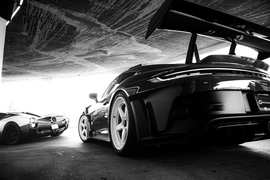
The defining feature, however, is the colossal swan-neck rear wing. This isn’t just for show; it’s a sophisticated aerodynamic device, complete with a Drag Reduction System (DRS) akin to those seen in Formula 1 or on hypercars like the McLaren P1. This commitment to aerodynamic downforce is further echoed in the underbody flaps, working in concert to pin the car to the tarmac. Beneath this aggressive skin lies a chassis honed for ultimate responsiveness. Adjustable race-derived suspension, dynamic engine mounts that manage vibrations and power delivery, and expansive air intakes all contribute to a package that prioritizes grip and agility above all else.
Propelling this mechanical marvel is a 4.0-liter naturally aspirated flat-six engine, a powerplant that sings a glorious symphony of mechanical precision, churning out a formidable 525 horsepower. The culmination of these engineering efforts is breathtaking: a 0-62 mph sprint in a mere 3.2 seconds, an astonishing 860 kilograms of downforce at 177 mph, and a blistering Nürburgring lap time of 6:44.85. To put it mildly, the 992.1 GT3 RS is as far removed from a standard GT3 as an eagle is from a swallow – a raptor in a world of songbirds. Discussions around 992 GT3 RS performance upgrades are frequent, but the car’s factory-level capabilities are already astronomical.
The 992.2 GT3 RS: Evolution, Not Revolution, at the Nürburgring
The automotive world is abuzz with anticipation for the next chapter: the 992.2 GT3 RS. Recent spy shots, captured during its rigorous testing phase at the very crucible of performance – the Nürburgring – reveal that this evolution will be characteristically Porsche: subtle yet significant. As is the hallmark of every new 911 generation, the visual differences from the outgoing 992.1 are understated. We see the familiar central radiator with its distinctive “nostril” outlets, the imposing swan-neck rear wing with DRS, the aggressive air intakes, and the purposeful side skirts. Even the door handles remain consistent, a nod to the continuity of design that defines the 911.
A few nuanced alterations are apparent. Lower-mounted indicator lights, a feature that has been integrated into the headlight clusters for many 992.2 models, are present on this GT3 RS, suggesting a deliberate separation for functional clarity. The rear diffuser has undergone a slight redesign, incorporating small, discreet intakes on either side of the exhaust system. While the presence of the 992.2 range’s digital dashboard remains speculative, the overall impression is of a familiar, aggressive, and supremely effective track weapon, embodying the very essence of the GT3 RS spirit. The conversation around next-gen GT3 RS specs is ongoing, but the spy shots offer compelling clues.
The Heart of the Beast: Natural Aspiration vs. Hybridization
The most intriguing speculation surrounding the 992.2 GT3 RS concerns its powertrain. Rumors suggest it might adopt the 3.6-liter twin-turbo hybrid flat-six that has become a cornerstone of the broader 992.2 range, potentially boosting power significantly beyond the 4.0-liter naturally aspirated unit. However, as someone deeply entrenched in the intricacies of automotive engineering, I harbor strong reservations about this direction.
Firstly, if Porsche intended to standardize its hybrid powertrain across the GT model line, it’s logical to assume the GT3 itself would have received this treatment. The fact that it did not strongly indicates a deliberate decision to maintain a distinct identity for the GT3 and its more extreme RS variant.
Secondly, despite the undeniable advancements made by the engineers in Stuttgart, hybrid powertrains, by their very nature, introduce additional weight. For a car like the GT3 RS, where every kilogram is scrutinized and every ounce of mass strategically managed, this added heft is, frankly, anathema.
Most crucially, however, is the question of spirit. At their core, the GT3 and GT3 RS are not hypercars designed solely to chase headline-grabbing acceleration figures. They are purebred sports cars, honed and sharpened to deliver an exhilarating, mechanical connection between driver, machine, and road. Their purpose is to thrill, to engage, and to reward precise inputs with immediate and visceral feedback. Introducing a hybrid system simply for the sake of increased power, without a fundamental reevaluation of the car’s philosophy, would, in my estimation, dilute this core essence.
The GT2 RS: The Hybrid Powerhouse?
This is where the anticipated GT2 RS enters the narrative. It is far more plausible that the 3.6-liter hybrid flat-six will find its home in the even more extreme GT2 RS, a car positioned to excel in outright performance where such technological advancements are more aligned with its purpose. Porsche understands that the clientele for the GT3 RS seeks the purest, most mechanical, and most track-focused driving experience available. To deviate from the naturally aspirated flat-six, particularly for the GT3 RS, feels fundamentally incongruous with its identity. This sentiment is amplified by the very real possibility that the 4.0-liter naturally aspirated engine might be reaching its swansong. This makes the 992.2 GT3 RS engine a critical point of discussion.
Rivalry on the Horizon: The AMG GT’s Challenge
The automotive landscape is constantly shifting, and the emergence of formidable rivals is a testament to the enduring appeal of the track-focused sports car segment. Recent spy shots of the new track-hardened AMG GT suggest a potent contender entering the fray, likely to compete directly with either the upcoming GT2 RS or perhaps even the GT3 RS itself. While the new AMG GT appears impressively capable, it faces an almost insurmountable legacy. There’s a reason the Porsche 911 GT3 RS has not just endured but thrived for two decades. Its unwavering dedication to a singular vision of driving purity is its superpower.
A Glorious Farewell: The Symphony of the Flat-Six
As the 992.2 GT3 RS approaches its debut, and with it the potential culmination of the naturally aspirated flat-six era in this specific guise, there’s a palpable sense of anticipation for a truly epic send-off. If this is indeed the swan song for this legendary engine in the RS package, it promises to be a performance of unparalleled magnitude. It will go out not with a whisper, but with the thunderous, soul-stirring roar of a finely tuned flat-six – a fitting crescendo for a car that has defined automotive excellence for a generation.
For enthusiasts and collectors alike, the prospect of the new Porsche GT3 RS model is always a significant event. The continued pursuit of perfection, even in its most extreme forms, is what makes Porsche’s offerings so compelling. Whether you’re in the market for the latest track technology or seeking to understand the heritage behind these incredible machines, the GT3 RS story continues to unfold with captivating intensity.
The enduring legacy of the Porsche 911 GT3 RS is not just about lap times or horsepower figures; it’s about the indelible connection it forges with the driver, the unwavering commitment to engineering excellence, and the relentless pursuit of automotive perfection. As the 992.2 generation prepares to take the stage, we eagerly await the next evolution of this legendary machine.
Ready to experience the pinnacle of track-focused driving? Explore the latest Porsche 911 GT3 RS models and discover how you can become part of this extraordinary automotive legacy today.