
2025 Automotive State of the Union: The Engineering Zenith of the Best Supercars
As I stand on the pit lane of the Circuit of the Americas, the air thick with the scent of high-octane fuel and burning rubbe
r, the transformation of the automotive industry is palpable. Having spent the last decade analyzing chassis dynamics, powertrain evolution, and the luxury market, I can confidently say that 2025 represents a singular moment in history. We are witnessing the precise intersection of analog emotion and digital perfection. The era of the “hypercar” has fully matured, and the best supercars of 2025 are no longer defined solely by top speed, but by the seamless integration of electrification, aerodynamics, and driver engagement.
This year, the narrative isn’t just about the dying breath of the internal combustion engine; it is about its greatest evolution. From the wind-swept hills of Maranello to the precision manufacturing hubs of Germany and the revived muscle of Detroit, the automotive landscape is delivering machines that blur the line between road-legal transport and LMP1-grade race engineering.
The Hybrid Hegemony: Redefining Propulsion
Ten years ago, hybridization was viewed with skepticism by purists—a heavy, complicated concession to emissions regulations. Today, it is the secret weapon of the best supercars of 2025. We are seeing a move toward “torque-fill” technology, where electric motors eliminate turbo lag, providing the instantaneous response of a naturally aspirated engine with the mid-range punch of forced induction.
The quest for the ultimate lap time has forced engineers to look beyond displacement. The standout trend this year is the high-voltage architecture. By utilizing lightweight lithium-ion batteries and compact axial-flux motors, manufacturers are enhancing power-to-weight ratios rather than diminishing them. This is the new standard for automotive engineering: systems that harvest kinetic energy under braking (KERS) and deploy it aggressively on exit.
When we evaluate the best supercars of 2025, we are really evaluating the software as much as the hardware. The traction control systems now predict traction loss before it happens, adjusting torque distribution in milliseconds. This is not just transportation; it is a partnership between human intent and machine execution.
Track-Only Titans: The Ferrari and McLaren Duel
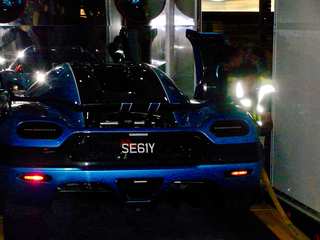 For the ultra-high-net-worth individual, the public road has become too constraining. The true performance capabilities of modern engineering can only be unlocked on a closed circuit. This shift has given rise to the “Customer Racing” programs, dominated this year by the giants of Formula 1: Ferrari and McLaren.
The Ferrari FXX K Evo is the current benchmark for this segment. Having analyzed its telemetry data, I can attest that this is not merely a car; it is a rolling laboratory. The hybrid V12 powertrain is a masterpiece of thermal efficiency, but the real story is the aero-mapping. The active rear spoiler and vortex generators work in concert to generate downforce figures that rival dedicated GT3 racers. For the select few invited to the Clienti program, the FXX K Evo offers a direct line to the Scuderia’s development team. It is an investment in the brand’s future as much as it is a vehicle ownership experience.
Across the channel, the McLaren P1 GTR continues to uphold the Woking philosophy of relentless weight reduction. Stripped of all road-going necessities, the P1 GTR utilizes a drag reduction system (DRS) and a push-to-pass E-Motor boost that mimics the operational logic of a Formula 1 car. The suspension geometry is rigid, the slick tires are unforgiving, and the experience is violent in the best possible way. This machine requires a dedicated support team and specialized exotic car insurance coverage designed for track usage, reflecting its status as a serious competition instrument.
Not to be outdone, the Aston Martin Vulcan brings a different flavor to the track day. It relies on a massive, naturally aspirated V12. In a world of turbochargers, the Vulcan is a sensory overload, a carbon-fiber sculpture that prioritizes mechanical grip and acoustic drama. It proves that even in 2025, there is a deep market desire for the raw, unmuted sound of twelve cylinders screaming at 8,000 RPM.
The Electric Paradigm: High Voltage Performance
The skepticism surrounding electric vehicles in the supercar segment has largely evaporated, replaced by a respect for their distinct performance advantages. The best supercars of 2025 list now invariably includes pure EVs, not as token eco-friendly options, but as acceleration monsters.
Porsche has led this charge with the production evolution of the Mission E architecture. While the brand built its legacy on the flat-six engine, their move to an 800-volt system has revolutionized the EV ownership proposition. This voltage allows for thinner cabling (reducing weight) and repeatable high-performance launches without thermal degradation. The center of gravity in the Mission E is lower than a 911, providing handling characteristics that defy the vehicle’s mass.
Similarly, the arrival of the new Acura NSX has cemented the “Sport Hybrid” concept. By utilizing three electric motors—two on the front axle for torque vectoring and one assisting the engine—the NSX can rotate the car through a corner in a way a traditional mechanical differential simply cannot. It pulls the nose into the apex, making the driver feel heroic. It is a technological marvel that showcases how complex algorithms can create a natural, fluid driving experience.
The V12 and V10 Legacy: The Old Guard Strikes Back
Despite the electric surge, the market for large-displacement internal combustion engines remains robust, driven by collectors and enthusiasts who value character over clinical efficiency.
The Lamborghini Aventador SVJ stands as the defiant king of this hill. It is likely one of the last of its kind—a naturally aspirated V12 flagship without hybridization. The SVJ utilizes the ALA (Aerodinamica Lamborghini Attiva) system, which uses air flaps to vector aero load, effectively pushing the inside wheel down during cornering. It is a chaotic, loud, and visually aggressive machine that embodies the Italian supercar spirit. For those looking at supercar investment portfolios, the SVJ represents a tangible asset likely to appreciate as emissions regulations tighten further.
Audi’s R8 V10 Plus offers a counterpoint. It shares the Lamborghini’s heart (the glorious 5.2-liter V10) but packages it in a chassis that is usable daily. The R8 remains the most accessible way to experience a high-revving mid-engine supercar. Its Quattro all-wheel-drive system provides confidence in all weather conditions, making it a viable option for buyers in variable climates like the Pacific Northwest or the Northeast US.
Porsche’s Precision Tools
No discussion of the best supercars of 2025 is complete without the Weissach heavy hitters. The Porsche 911 GT3 RS remains the gold standard for driver feedback. It is not the fastest in a straight line, but its ability to communicate surface texture through the steering wheel is unmatched. The use of ball-joint suspension mountings instead of rubber bushings removes all play from the chassis, resulting in laser-like precision.
On the other end of the spectrum, the Porsche Cayman GT4 continues to serve the purist. With a manual transmission and a mid-engine layout, it is perfectly balanced. It is less about lap times and more about the joy of the perfect heel-and-toe downshift. It proves that horsepower isn’t the only metric of success.
The American Resurgence: Detroit’s Supercar Ambitions
The United States has firmly re-established itself as a producer of world-class exotic machinery. The headline act is the Ford GT. This is not a muscle car; it is a Le Mans prototype with license plates. The carbon-fiber monocoque, the pushrod suspension, and the active aerodynamics are derived directly from top-tier motorsport. The EcoBoost V6 may lack the cylinder count of its European rivals, but its specific output and lightweight packaging make the Ford GT a lethal track weapon.
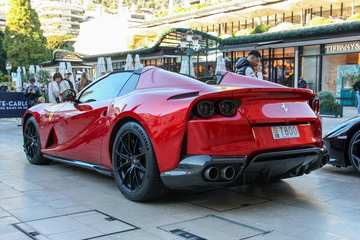 For those who prefer a more traditional American recipe, the Shelby GT350R Mustang delivers. The flat-plane crank V8 engine spins to 8,250 RPM, creating a soundtrack that is distinctly American yet exotic. It features carbon-fiber wheels as standard—a technology previously reserved for multimillion-dollar hypercars—drastically reducing unsprung weight and improving turn-in response.
British Engineering and Bespoke Luxury
McLaren’s expansion into the “Sports Series” with the 570S has democratized carbon-fiber chassis technology. It offers the visual drama of dihedral doors and the performance of a mid-engine exotic at a price point that competes with high-end sports cars. It is arguably the most important car in McLaren’s lineup for volume and brand visibility.
Meanwhile, the McLaren 675LT (Longtail) caters to the hardcore enthusiast. It is lighter, faster, and more focused than the car it is based on. The “Longtail” designation is a nod to McLaren’s racing heritage, focusing on aerodynamic stability at high speeds.
Bentley is also shifting gears. The EXP 10 Speed 6 concept signals a move toward lighter, more agile two-seat sports cars. This suggests a future where British luxury doesn’t necessarily mean heavy grand tourers, but rather agile, high-performance machines that retain bespoke craftsmanship.
The Unicorns: Limited Editions and Hyper-Exclusivity
The apex of the market is occupied by vehicles where price is irrelevant, and allocation is the only currency. The Ferrari Sergio, limited to just six units, is less a car and more a piece of kinetic art designed by Pininfarina. Similarly, the Aston Martin Vantage GT3 special edition brings race-car specification to the road for a lucky 100 owners.
A fascinating development is the rise of boutique manufacturers like Scuderia Cameron Glickenhaus (SCG). The SCG003 is a race car that you can legally drive to the track, race, and drive home. It eschews the comforts of modern motoring for the purity of motorsport engineering. These vehicles appeal to a specific demographic of collector who values engineering provenance over brand recognition.
Market Dynamics: Ownership and Investment in 2025
Owning one of the best supercars of 2025 requires navigating a complex landscape of finance and logistics. The market has seen a surge in demand for exotic car financing solutions that allow owners to leverage capital rather than tying it up in depreciating assets. However, for limited-run models like the Ferrari FXX K or the Ford GT, the vehicle is often an appreciating asset, outperforming traditional stock market indices.
Prospective owners must also consider the nuances of luxury car insurance. Premiums are heavily influenced by the vehicle’s usage profile, storage security, and the owner’s driving history. Specialized brokers are now essential for arranging coverage for track use and international transport.
Furthermore, maintenance costs for these high-performance machines have evolved. With ceramic composite brakes and active hybrid systems, a routine service can rival the cost of a daily driver sedan. However, services like ceramic coating for luxury cars and Paint Protection Film (PPF) have become mandatory first steps for any new delivery, preserving the vehicle’s finish and value against the harsh realities of road debris.
The Final Verdict: A Golden Era
As we survey the automotive world in 2025, it is clear we are living in a golden era. The fears that technology would dilute the driving experience have proven unfounded. Instead, technology has amplified it. Whether you crave the high-RPM scream of a Ferrari 488 GTB (and its successors), the silent torque of a Porsche Mission E, or the brute force of an American V8, the options are limitless.
The best supercars of 2025 are faster, safer, and more capable than anything that came before. They are the result of brilliant minds pushing physics to the absolute limit.
For the enthusiast, the observer, or the prospective buyer, the advice is simple: do not wait. The industry is evolving rapidly, and the internal combustion masterpieces of today will be the legends of tomorrow. If you have the means, visit your local specialist dealer, book a track experience, or attend a Concours event. The world of high-performance engineering is open, and the driver’s seat is waiting for you.
 Ready to experience the pinnacle of automotive performance? Contact your premier luxury automotive broker today to schedule a consultation and get behind the wheel of your dream machine.