
Beyond Top Speed: The Engineering Renaissance of 2025’s Hypercar Elite
For the better part of the last decade, I have lived my life in the fast lane—literally. From the rain-slicked tarmac of the Nürburgrin
g to the sun-drenched coastal highways of California, I’ve chronicled the automotive industry’s obsession with speed. But as we settle firmly into 2025, the narrative has shifted. We are no longer simply chasing higher top speeds. The conversation has evolved from brute force to brainpower. This is the era of intelligent velocity, where supercar technology has transcended mechanical limits to merge with digital precision.
Ten years ago, the skepticism surrounding hybridization and electrification in the ultra-high-performance sector was palpable. Today, that skepticism has evaporated, replaced by the silent hum of electric motors working in concert with screaming combustion engines. As an analyst and test driver, I have watched the “supercar” category fragment and reform into something far more complex: the hypercar ecosystem. This year represents a watershed moment where the beasts of the road aren’t just tamed; they are engineered with a level of sophistication that was once the exclusive domain of aerospace.
The Hybrid Integration: Torque as a Weapon
The most significant advancement in supercar technology this year isn’t found in a brochure’s horsepower figure, but in the seamless integration of electrified powertrains. We have moved past the era where batteries were merely for efficiency. In 2025, electricity is a performance additive, a stimulant injected directly into the driveline.
Take the evolution of the Acura NSX, for instance. It’s not just about saving fuel; it’s about torque vectoring. By utilizing a twin-turbo V6 in conjunction with three electric motors, engineers have eliminated the greatest enemy of the turbocharged engine: lag. The electric motors fill the torque gaps instantly, providing a linearity of acceleration that feels almost telepathic. This is the new standard in supercar technology—using electrons to sharpen the razor’s edge of internal combustion.
This philosophy is mirrored in the upper echelons of Maranello and Woking. The debate over purity is dead; the stopwatch won. The hybrid architectures we see now allow for capabilities that a naturally aspirated engine simply cannot match on its own. It is about the “fill”—that instantaneous shove into the seat back while the turbos spool. For the driver, this translates to an exit speed out of corners that defies the laws of physics.
 The Rolling Laboratories: Track-Only Engineering
For the ultra-wealthy enthusiast, the street is no longer enough. The proliferation of track-only specials has created a new segment of supercar technology focused entirely on lap times, unshackled by pedestrian safety regulations or emissions compliance.
The Ferrari FXX K Evo stands as the monolith of this movement. Having spent time analyzing its telemetry, I can tell you this machine is less of a car and more of a science experiment in aerodynamics. The genius here lies in the active aero systems. We aren’t just talking about a static wing; we are talking about flaps and diffusers that adjust in milliseconds based on steering angle, throttle position, and yaw rate. It generates downforce levels that would crush a standard suspension. For the select few clients involved in Ferrari’s XX program, they aren’t just buying a car; they are buying into a development cycle, providing data that will trickle down to the road cars of 2030.
Similarly, the McLaren P1 GTR and the Aston Martin Vulcan represent the zenith of British engineering. The Vulcan, with its monolithic V12, serves as a reminder of the visceral past, yet it is constructed with carbon fiber techniques that belong to the future. The P1 GTR, conversely, brings Formula 1 technology directly to the consumer. The KERS-style push-to-pass systems and race-slick tires create an environment where the driver must be an athlete. Owning these vehicles requires more than just capital; it requires a dedicated team of mechanics and often, luxury car insurance policies that are as bespoke as the vehicles themselves.
The Electric Paradigm: Porsche’s 800-Volt Revolution
If there is one manufacturer that has successfully bridged the emotional gap between combustion and electrons, it is Porsche. The production maturation of the Mission E concept (now fully realized in the Taycan lineage) has proven that supercar technology does not require spark plugs to be soulful.
The game-changer here is the 800-volt architecture. While early EVs struggled with thermal management during repeated hard launches, Porsche’s engineering allows for consistent, repeatable performance. You can launch it, brake hard, and launch it again without the system derating power to protect the battery. This thermal resilience is the hallmark of German engineering. Furthermore, the low center of gravity provided by the floor-mounted battery pack offers handling dynamics that feel unnaturally planted.
For buyers in tech hubs like San Francisco or Austin, the appeal is twofold: blistering acceleration that rivals a hyperbike, and the ability to utilize high-speed charging networks. This is the democratization of hyper-performance, bringing 0-60 times of under three seconds to a four-door sedan. It forces us to redefine what a performance car actually is.
The Last Stand of the Analog Heroes
Despite the digital wave, 2025 has not forgotten the purists. There remains a robust market for the analog experience, a segment where supercar technology is used to enhance, not replace, the mechanical connection.
The Lamborghini Aventador SVJ is the poster child for this resistance. It is a violent, loud, and unapologetic celebration of the V12 engine. But look closer, and you see the innovation. The ALA (Aerodinamica Lamborghini Attiva) system vectoring air flow to stall the rear wing for top speed or grab it for cornering is genius. It uses air the way the NSX uses electricity—to rotate the car. It proves that the old guard can still learn new tricks.
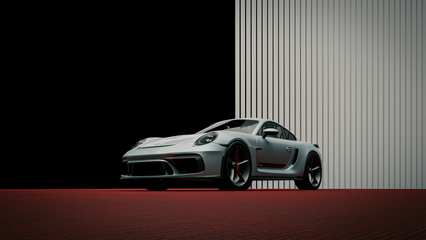
Porsche’s GT3 RS continues to be the benchmark for chassis communication. In a world of numb electric steering, the GT3 RS vibrates with information. It tells you exactly what the front contact patches are doing. For the driver who values feedback over outright acceleration, this remains the pinnacle. It is the preferred weapon for track days across the US, from Laguna Seca to Road Atlanta.
Analyzing the Investment Landscape
As an industry insider, I often advise collectors on automotive asset management. The market in 2025 has become incredibly nuanced. The days of buying any Ferrari and watching it appreciate are over. The smart money is chasing scarcity and provenance.
Vehicles like the Ford GT, with its strict application process and limited production run, have performed exceptionally well as investment vehicles. The Ford GT is a piece of American history, utilizing a carbon-fiber monocoque and a race-proven EcoBoost V6 that upset the European aristocracy at Le Mans.
 limited-edition models like the McLaren 675LT or the Aston Martin Vantage GT3 are also seeing strong retention. These “Longtail” and track-focused variants offer a sharper driving experience and lower production numbers, key indicators for future value. For those looking to enter this market, securing hypercar financing has become a specialized financial service, catering to assets that often cost more than the average American home.
The Rise of the “Entry-Level” Supercar
Perhaps the most exciting development in supercar technology is how it has trickled down to more accessible price points. The McLaren 570S and the Audi R8 V10 Plus are prime examples of this.
The 570S brings a carbon-fiber tub—technology once reserved for million-dollar hypercars—to the sports car segment. It is light, agile, and incredibly fast. It allows a broader range of enthusiasts to experience the benefits of composite construction. Meanwhile, the Audi R8 remains the only way to get a naturally aspirated V10 in a package that you can genuinely drive every day. It is the perfect synthesis of Italian passion (sharing its heart with the Lamborghini Huracán) and German logical usability.
For buyers in cities like Miami or Los Angeles, where the car is as much a status symbol as a transport method, these vehicles offer the visual drama of a hypercar without the temperamental nature of a track-only machine.
American Muscle Reimagined
We cannot discuss 2025’s performance landscape without nodding to the domestic resurgence. The Shelby GT350R is not a blunt instrument; it is a scalpel. The flat-plane crank V8 revs to the moon, mimicking the character of a Ferrari V8 but with a distinct American baritone. Its carbon-fiber wheels were an industry first for mass production, reducing unsprung weight and drastically improving turn-in response.
Similarly, the Corvette (evolving into its mid-engine architecture) and the advanced aero of the Viper’s spiritual successors show that American engineers are mastering the nuances of chassis dynamics. These cars are no longer just drag strip heroes; they are decimating European lap times at a fraction of the cost.
Bespoke Luxury and The Future of Customization
At the very top of the food chain, we are seeing a return to coachbuilding. The Ferrari Sergio and the Scuderia Cameron Glickenhaus (SCG003) are evidence that the ultra-rich want something unique. Supercar technology here is about modularity—building a chassis that can support a completely unique body designed to the owner’s taste.
This level of customization extends to the ownership experience. Brands are offering ceramic coating for supercars right from the factory, clear bra installation, and bespoke luggage sets that fit perfectly into the optimized cargo spaces. It is a holistic approach to luxury.
Conclusion: The Driver Remains Central
As we survey the automotive landscape of 2025, it is easy to get lost in the jargon of kilowatt-hours, downforce coefficients, and hybrid architectures. However, the soul of the industry remains the driver. Whether it is the silent, violent thrust of a Porsche electric motor, the mechanical scream of a Lamborghini V12, or the surgical precision of a McLaren chassis, the goal remains the same: to ignite the senses.
Supercar technology has not diluted the experience; it has concentrated it. It has made cars faster, safer, and strangely, more accessible in their performance limits. We are living in a golden age of engineering where the impossible has become the standard.
 If you have been waiting on the sidelines, watching the evolution of these machines from a distance, now is the time to engage. The convergence of analog soul and digital brain is at its peak. Visit your local premium dealer, book a consultation, or secure a slot at an upcoming track experience. The future isn’t just arriving; it’s already doing 200 mph in the fast lane, and you deserve to be in the driver’s seat.