
Velocity Defined: The Definitive Guide to the Fastest Production Cars of 2025
The pursuit of velocity is more than a metric; it is the heartbeat of the automotive industry. Over the last ten years, I have w
atched the definition of “fast” shift from a raw number on a speedometer to a complex symphony of aerodynamics, energy density, and computational traction control. In 2015, breaking the 250 mph barrier was the gold standard. Today, as we navigate the landscape of 2025, the goalposts have moved significantly. We are no longer just looking at internal combustion engines screaming at the redline; we are witnessing a silent, violent revolution where electrons contest hydrocarbons for the title of the fastest production car in the world.
This year represents a massive inflection point. The engineering limitations that once tethered us to the ground are being severed by active aerodynamics and hybrid powertrains. For the high-net-worth collector and the automotive enthusiast alike, understanding this hierarchy is essential. It is not merely about bragging rights; it is about understanding the pinnacle of material science and mechanical engineering. In this comprehensive analysis, we will dissect the current apex predators of the asphalt, exploring the technology that propels them and the market forces that define their exclusivity.
The New Era of Speed: Engineering the Impossible
Before dissecting individual models, one must understand the environment in which these machines operate. The race for the fastest production car has evolved into a battle against air resistance. At speeds exceeding 300 mph, the air becomes like a solid wall. Overcoming it requires more than just horsepower; it requires distinct aerodynamic efficiency.
Furthermore, the integration of high-voltage electrification has changed the torque curve entirely. Where V12 and W16 engines once needed to build revs to generate thrust, modern electric hypercars offer instantaneous torque, altering how we measure acceleration and quarter-mile times. This technological warfare has birthed a new generation of vehicles that are road-legal yet possess the capabilities of Le Mans prototypes.
The 300 MPH Club: Breaking the Sound Barrier of the Road
The holy grail of modern automotive performance is the 300 mph barrier. Only a select few have claimed to breach it, and even fewer have validated it.
Koenigsegg Jesko Absolut: The Swedish Hammer
Christian von Koenigsegg has spent decades perfecting the art of the hypercar, and the Jesko Absolut is his magnum opus. Unlike its track-focused sibling, the Absolut removes the massive rear wing in favor of a pair of fighter-jet-inspired fins to stabilize airflow and reduce drag to a coefficient of just 0.278 Cd.
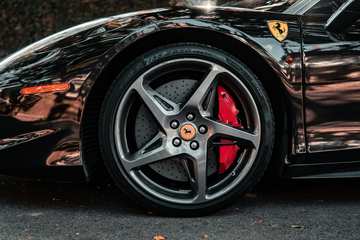 Under the rear deck lies a twin-turbocharged 5.0-liter V8 engine. When running on E85 biofuel, this unit delivers a staggering 1,600 horsepower. The power is managed by the Light Speed Transmission (LST), a gearbox so advanced it allows for near-instantaneous shifts, ensuring no momentum is lost. While the theoretical top speed is calculated at over 310 mph (499 km/h), the real-world application of this power makes it a prime contender for the title of fastest production car. For collectors, the Jesko represents a pinnacle asset, likely to appreciate significantly in value.
SSC Tuatara: American Ambition
The United States has a storied history of speed, and the SSC Tuatara is the modern torchbearer of that legacy. Produced in Washington State, this vehicle had a controversial start regarding its speed claims, but recent verified runs have solidified its place in the pantheon of speed.
Powered by a bespoke 5.9-liter twin-turbo V8, the Tuatara generates 1,750 horsepower on ethanol. What makes the Tuatara fascinating from an engineering standpoint is its drag coefficient of 0.279, achieved without sacrificing downforce. In verified testing, it has clocked 295 mph, with the manufacturer aiming higher. For American buyers, this represents the ultimate domestic achievement in automotive engineering, rivaling the best Europe has to offer.
Bugatti Tourbillon: The Hybrid V16 Masterpiece
For twenty years, the W16 engine defined Bugatti. In 2025, the Tourbillon introduces a new era. This is not just a replacement for the Chiron; it is a complete reimagining of the fastest production car concept. The Tourbillon utilizes a naturally aspirated V16 engine paired with three electric motors.
The result is 1,800 horsepower and an engine note that harkens back to the golden age of racing, sharpened by the immediate response of electric torque. While Bugatti has famously stated they are withdrawing from chasing top speed records to focus on luxury and driving dynamics, the engineering suggests the car is capable of exceeding 270 mph with ease. The craftsmanship inside the cabin—featuring analog gauges designed by Swiss watchmakers—reminds us that this is as much a luxury asset as it is a speed machine.
Hennessey Venom F5: The Texas Tornado
Hennessey Performance Engineering has stripped away the luxuries of the Bugatti to focus on one singular goal: being the fastest production car on the planet. The Venom F5 is built around a carbon fiber monocoque and powered by an engine dubbed “Fury”—a 6.6-liter twin-turbo V8 pushing 1,817 horsepower.
Hennessey’s approach is brute force meeting aerodynamic precision. The car lacks active aero flaps or hybrid systems; it is a pure driver’s car. With a target speed exceeding 300 mph, the F5 is currently undergoing high-speed testing at Kennedy Space Center. For investors looking at exotic car leasing or purchase, the Venom F5 offers a raw, unfiltered experience that is becoming increasingly rare in an electrified world.
The Electric Vanguards: Silent Velocity
The narrative of 2025 is incomplete without acknowledging the EV disruptors. These vehicles are redefining acceleration, utilizing torque vectoring to achieve cornering speeds that defy physics.
Yangwang U9 Xtreme: The New Challenger
The rise of the Chinese automotive sector is undeniable. The Yangwang U9 Xtreme, a subsidiary of BYD, stunned the world in late 2025 by clocking 308 mph on a German test track. This utilizes a quad-motor setup delivering nearly 3,000 horsepower.
What makes the U9 Xtreme unique is its DiSus-X suspension system, which allows the car to corner flat at extreme speeds. The 1,200-volt architecture ensures repeatable performance, solving the overheating issues that plagued early electric performance cars. This vehicle is a wake-up call to legacy manufacturers: the battle for the fastest production car is now a global affair.
Rimac Nevera R: The Croatian Lightning
Mate Rimac has effectively become the supplier of speed for the entire industry, but he keeps his best technology for his own badge. The Nevera R is the sharpened, track-focused evolution of the record-breaking Nevera.
With 2,107 horsepower, the Nevera R is not just fast in a straight line; it is agile. It utilizes a sophisticated All-Wheel Torque Vectoring system that adjusts power to each wheel over 100 times per second. It hits 60 mph in 1.74 seconds. For tech-focused buyers, the Rimac represents the future of software-defined performance.
Aspark Owl: The Low-Slung Assassin
Japan’s contribution to the list is the Aspark Owl. It holds the distinction of being the lowest road-legal hypercar, standing just 39 inches tall. This reduces the frontal area significantly, aiding its sprint to a top speed of 256 mph. Its acceleration is violent, hitting 60 mph in 1.72 seconds. The Aspark is a niche vehicle, rarer than most Bugattis, making it an intriguing option for those building a diverse investment portfolio of high-performance vehicles.
Open-Air Adrenaline: The Convertible Kings
Speed feels different when the roof is down. The sensory overload of wind noise and exhaust notes creates a visceral experience that a coupe cannot replicate.
 Bugatti Mistral: The Swan Song
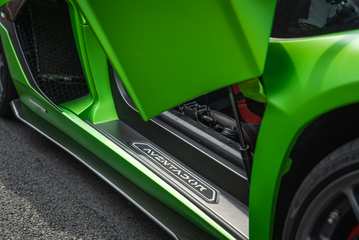
The Bugatti Mistral serves as the final farewell to the W16 engine. It is the fastest production car in the convertible segment, with a top speed of 261 mph (limited). The engineering challenge here was immense; removing the roof compromises structural rigidity. Bugatti engineers reinforced the monocoque to handle 1,600 horsepower without the roof, creating a roadster that feels as solid as a bank vault.
The Real-World Performers: Accessible Supercars
While hypercars capture the headlines, the “supercar” segment offers blistering performance that is more attainable and usable on a daily basis. These vehicles often feature better luxury car insurance rates and more accessible maintenance networks compared to limited-run hypercars.
Mercedes-AMG GT 63 S E Performance
This plug-in hybrid monster proves that you don’t need a dedicated chassis to go fast. With 831 horsepower combined from a V8 and an electric motor, it hits 196 mph. It bridges the gap between a Grand Tourer and a track weapon, offering advanced driver-assistance systems that make it viable for cross-country road trips in the US.
McLaren 750S and W1
McLaren continues to refine its formula with the 750S and the new W1 flagship. The W1, successor to the P1, utilizes ground-effect aerodynamics derived from Formula 1. While its top speed is capped around 217 mph, its lap times rival pure race cars. For the driver who prioritizes track days at Laguna Seca or COTA, McLaren remains the benchmark for steering feel and chassis feedback.
Ferrari SF90 XX Stradale
Ferrari’s first road-legal XX model is a technological tour de force. It brings the hybrid architecture of the standard SF90 to a new level of aggression. With 1,016 horsepower, it decimates the 0-60 sprint in 2.3 seconds. It represents the pinnacle of Italian performance, blending high resale value with emotional driving dynamics.
The Economics of Hyper-Speed
Owning the fastest production car is a financial commitment that extends far beyond the sticker price. In 2025, the ecosystem surrounding these vehicles has become a sophisticated financial market.
Investment Potential and Financing
Vehicles like the Koenigsegg Jesko or the Bugatti Tourbillon are rarely bought with cash. High-net-worth individuals often utilize supercar financing and specialized asset-backed loans to acquire these machines. This allows capital to remain invested elsewhere while the car—hopefully—appreciates. We are seeing interest rates for exotic car loans fluctuate, but the demand for limited-allocation build slots keeps the market buoyant.
Insurance and Maintenance
Securing luxury car insurance for a vehicle capable of 300 mph is a specialized process. Premiums can easily exceed $50,000 annually, depending on the driver’s history and storage security. Insurers now require detailed usage data and often mandate restricted mileage policies. Furthermore, maintenance is critical. A set of tires for a Bugatti or Koenigsegg, rated for high speeds, can cost upwards of $30,000. Prospective buyers must factor in these “running costs” when calculating the total cost of ownership.
The Dealership Experience
Whether you are visiting a showroom in Beverly Hills or Miami, the purchasing process for a fastest production car is bespoke. It involves factory visits, fitting sessions, and customization options that can add hundreds of thousands to the price. Building a relationship with a reputable exotic car dealership is vital for gaining access to future allocations of these limited-run models.
Conclusion: The Horizon of Velocity
The automotive landscape of 2025 proves that the internal combustion engine is not dead; it has simply found a partner in electrification. The battle for the title of the fastest production car drives innovation that eventually trickles down to consumer vehicles in the form of better battery management, aerodynamic efficiency, and safety systems.
We are living in the golden age of performance. From the raw American power of the Hennessey Venom F5 to the futuristic silence of the Yangwang U9, the choices are as diverse as they are fast. These machines are the pyramids of our era—monuments to what is physically possible when human ingenuity is unleashed.
For those ready to step into this world, the key is due diligence. Whether you are looking for vintage sports car values or the latest hypercar allocations, the market rewards the informed.
Are you ready to elevate your garage?
 If you are considering acquiring a high-performance vehicle, or simply want to stay ahead of the curve in automotive investment trends, do not navigate this complex market alone. Click here to browse our curated inventory of exotic vehicles and connect with our concierge team for a personalized consultation today.