
Velocity Kings 2025: The Definitive Guide to the Fastest Cars in the World
For over a decade, I have stood on the tarmac of proving grounds and walked the polished floors of Geneva and Pebble Beach, witness
ing the relentless evolution of automotive performance. The pursuit of speed is not merely a technical challenge; it is a visceral, fundamental human obsession. From the rattling frames of early combustion engines to the silent, violent acceleration of modern electrification, the industry has never stood still. But 2025 feels different. We have reached a singularity in automotive engineering where physics is being bent, not just challenged.
The narrative surrounding the fastest cars in the world has shifted dramatically. It is no longer solely about massive displacement and twelve-cylinder engines screaming at the redline. Today, it is a war fought on multiple fronts: aerodynamics, energy density, and computational traction control. For the high-net-worth collector and the automotive enthusiast alike, the current crop of hypercars offers a diversity of powertrains that was unimaginable just a few years ago.
In this analysis, we will strip away the marketing gloss and look under the carbon fiber skin of the 2025 apex predators. We will explore the machines that are legally allowed to wear a license plate yet possess the capability to cross continents at speeds previously reserved for light aircraft. If you are in the market for the ultimate status symbol, or simply keeping a pulse on the industry’s redline, this is your roadmap to the stratosphere of speed.
The 300 MPH Barrier: Engineering the Impossible
To understand the magnitude of what the fastest cars in the world are achieving today, one must appreciate the exponential increase in resistance that occurs at high velocity. Pushing a vehicle past 300 mph requires not just horsepower, but a complete mastery of fluid dynamics. The air becomes a solid wall, and tire technology is pushed to its absolute breaking point.
The manufacturers leading this charge—Koenigsegg, Bugatti, SSC, and Hennessey—are investing millions into R&D. This level of extreme engineering trickles down, influencing everything from luxury car insurance rates to the battery technology in your daily commuter.
Koenigsegg Jesko Absolut: The Swedish Mathematics of Speed
Christian von Koenigsegg operates less like a car manufacturer and more like an aerospace firm. The Jesko Absolut is the physical manifestation of his obsession with efficiency. It is widely regarded by industry insiders as the reigning king among the fastest cars in the world, even if its top speed remains a calculated theoretical maximum.
Unlike its track-focused sibling, the Absolut removes the massive rear wing to reduce drag to a startlingly low coefficient of 0.278. Under the rear deck lid sits a 5.0-liter twin-turbo V8 that defies logic. When running on E85 biofuel, it churns out 1,600 horsepower. But the magic isn’t just in the engine; it’s in the Light Speed Transmission (LST), a gearbox that allows for near-instantaneous shifts, ensuring that the relentless surge of power is never interrupted.
While the simulated top speed suggests a ceiling above 310 mph (499 km/h), Koenigsegg has proven the car’s lethality in other metrics. The 0-400-0 km/h record of 27.83 seconds is a testament to its comprehensive performance. It accelerates violently and stops just as hard. For collectors scouting exotic car dealerships in Los Angeles or Miami, the Jesko Absolut is the ultimate “get.” It is a machine that doesn’t just participate in the conversation of speed; it dictates it.
SSC Tuatara: The American Challenger
Across the Atlantic, the SSC Tuatara represents the resilience of American engineering. Built in Richland, Washington, the Tuatara is a V8-powered ballistic missile designed to bring the title of the fastest car in the world back to US soil.
The Tuatara’s heart is a bespoke 5.9-liter twin-turbo flat-plane crank V8. On ethanol, it delivers a terrifying 1,750 horsepower. The narrative of the Tuatara has been rocky, marred by early controversy regarding GPS data verification. However, SSC North America did what any reputable manufacturer would do: they went back to the tarmac. In early 2022, they validated a run of 295 mph.
While it falls short of the initial 331 mph claim, 295 mph on a public road makes it undeniably one of the fastest production cars in existence. The Tuatara is raw and visceral. It lacks the complex hybrid systems of its European counterparts, relying instead on brute force and exceptional aerodynamics. For investors looking into supercar financing, the Tuatara represents a piece of American automotive history that is likely to appreciate as the internal combustion era draws to a close.
 Hennessey Venom F5: The Texas Tornado
Staying in the United States, Hennessey Performance Engineering has transitioned from a tuner shop to a full-fledged manufacturer with the Venom F5. John Hennessey’s philosophy is simple: simplify and add power. The Venom F5 is built around a carbon fiber monocoque and powered by an engine dubbed “Fury”—a 6.6-liter twin-turbo V8 producing 1,817 horsepower.
The Venom F5 has currently clocked 272 mph, but the roadmap points north of 300 mph. What makes the F5 unique in the list of the fastest cars in the world is its lack of driver aids. It is an analog monster in a digital age, demanding total respect and razor-sharp reflexes from its driver. It captures the spirit of the old-school muscle car but executes it with aerospace-grade materials.
Bugatti Tourbillon: The Hybrid Aristocrat
Bugatti has always played a different game. They don’t just build fast cars; they build luxury goods that happen to be the fastest cars in the world. With the retirement of the Chiron, the new Bugatti Tourbillon enters the arena for 2025.
The Tourbillon drops the W16 for a naturally aspirated V16 hybridized system, producing a combined 1,800 horsepower. It is a masterpiece of mechanical watch-like precision—hence the name. While capable of hitting 60 mph in under 2.0 seconds, the Tourbillon is focused on high-speed stability and opulence.
Priced around $4 million, obtaining a Tourbillon requires more than just capital; it often requires a relationship with the brand. Buyers should consult with high-net-worth wealth managers to navigate the complexities of luxury vehicle tax and import duties associated with such a purchase.
The Electric Uprising: Silent Velocity
For years, the skepticism surrounding electric vehicles (EVs) was centered on top speed. EVs were quick off the line but ran out of breath at the top end due to motor RPM limits and thermal management. That era is over. The fastest cars in the world now include battery-powered giants that are reshaping the industry.
Yangwang U9 Xtreme: The Chinese Disruptor
Perhaps the most shocking entrant to the 2025 lineup is the Yangwang U9 Xtreme. BYD’s luxury division has created a vehicle that officially clocked 308 mph in testing. This isn’t just a win for EV tech; it’s a changing of the guard.
The U9 utilizes a quad-motor setup delivering nearly 3,000 horsepower. Its 1,200-volt architecture allows for sustained high-power output without the overheating issues that plagued early electric performance cars. Limited to just 30 units, this vehicle is a target for collectors who specialize in future-tech. The existence of the U9 proves that the title of fastest car in the world is no longer the exclusive property of legacy European and American brands.
Rimac Nevera R: The Croatian Lightning
Mate Rimac is the Elon Musk of hypercars, but with a sharper focus on handling dynamics. The Rimac Nevera R is the sharpened, track-focused evolution of the record-breaking Nevera. With 2,107 horsepower, it pushes the top speed to 267 mph.
The genius of the Nevera R lies in its torque vectoring. It computes the grip levels of each tire 100 times a second, adjusting power delivery instantly. This makes it approachable in a way that a RWD V8 hypercar is not. It accelerates to 60 mph in 1.74 seconds. It is violence without the drama of noise. For those looking to buy a hypercar that offers cutting-edge software alongside hardware, the Rimac is the benchmark.
Aspark Owl: The Low-Slung Enigma
Japan’s contribution to the electric hypercar race is the Aspark Owl. It holds the distinction of being one of the lowest road-legal cars ever made, standing just 39 inches tall. Its 1,953 horsepower quad-motor setup launches it to 60 mph in 1.72 seconds, topping out at 256 mph.
While less publicized than the Rimac, the Aspark Owl is a marvel of packaging and efficiency. It proves that there is still room for boutique manufacturers to challenge the fastest cars in the world through specialized engineering.
Unique Configurations: Engineering for Experience
Speed is not always about the raw number; sometimes, it is about how that speed is delivered.
McLaren Speedtail: The Aero-Luxe GT
McLaren describes the Speedtail not as a track car, but as a “Hyper-GT.” With a top speed of 250 mph, it is the fastest road car McLaren has ever built, eclipsing the legendary F1. The central driving position is a direct homage to that 90s icon, offering a unique, symmetrical view of the road.
The bodywork is a tear-drop shape, the most aerodynamically efficient form in nature. It lacks traditional side mirrors, using cameras to retract and smooth the airflow. Driving a Speedtail is an event. It flows down the road with a fluidity that aggressive track cars lack. It is a prime candidate for collector car insurance policies that value rarity and historical significance.
Bugatti Mistral: The Swan Song
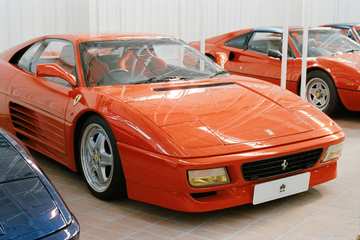 The Bugatti Mistral is the final road-going model to utilize the W16 engine, and it does so without a roof. Achieving 270 mph in a convertible is a terrified, exhilarating experience that defies logic. The acoustic experience of the massive turbos inhaling air just inches behind the driver’s head creates an unparalleled sensory overload. It is arguably the most desirable open-top vehicle among the fastest cars in the world.
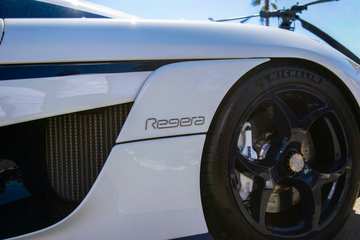
Koenigsegg Regera: The Gearless Wonder
The Regera is an older model in this lineup, but it remains technologically superior to almost anything else on the road. Its “Direct Drive” system eliminates the transmission entirely. There are no gears to shift. The engine and electric motors drive the wheels directly through a hydraulic coupling.
The sensation is unique: a continuous, linear wave of torque that pushes the car from standstill to 250 mph without a single pause for a gear change. It feels like taking off in a jet.
Accessible Velocity: The Real-World Rockets
While the multi-million dollar hypercars grab the headlines, the technology they pioneer eventually trickles down. In 2025, you can walk into a dealership and finance a car that hits nearly 200 mph for a fraction of the cost of a Jesko. These are the fastest cars in the world that you can actually drive to the office.
Mercedes-AMG GT: The German Muscle
The new AMG GT balances the raw aggression of a muscle car with the refinement of a luxury coupe. Its 4.0-liter V8 pushes it to 196 mph. It is a car that commands respect on the Autobahn and the Pacific Coast Highway alike. With excellent lease programs and luxury auto loan options available, the AMG GT is a realistic entry point into the 300 km/h club.
BMW M8 Competition: The Executive Express
For the executive who needs to cross state lines rapidly, the BMW M8 Competition is the weapon of choice. It is a heavy, luxurious Grand Tourer that somehow manages to dance like a sports car. With the M Driver’s package, it unlocks a top speed of 190 mph. It features industry-leading infotainment and driver assistance systems, proving that speed does not have to come at the expense of comfort.
Alfa Romeo Giulia Quadrifoglio: The Soulful Sedan
The Giulia Quadrifoglio remains one of the most emotional sedans on the market. Its Ferrari-derived V6 sings a tune that puts German competitors to shame. Hitting 191 mph in a four-door sedan is a feat that few manufacturers attempt, let alone execute with this much style. It is a fantastic option for those seeking performance car leasing deals that offer high smiles-per-gallon.
Lexus LC500: The Art Piece
While not the fastest in this group (168 mph), the Lexus LC500 deserves mention for its naturally aspirated V8 responsiveness and stunning concept-car looks. It is a car built for longevity and reliability—traits often missing in the high-performance sector. It holds its value exceptionally well, making it a smart play for those monitoring used luxury car prices.
Navigating the Market: Buying the Fastest Cars in the World
Entering the market for the fastest cars in the world is a complex endeavor. It is not as simple as walking into a showroom and swiping a card.
Financing and Insurance
Securing supercar financing requires a specialized approach. Traditional banks often balk at seven-figure stickers. You will need lenders who understand the asset class and the appreciation potential of vehicles like the Bugatti Tourbillon or Koenigsegg Jesko. Similarly, luxury car insurance is a bespoke product. Providers will require details on storage security, annual mileage, and driver history. Premiums can easily rival the cost of a standard family car, but for full protection of a $3 million asset, it is non-negotiable.
Maintenance and Storage
Owning a 300-mph machine requires meticulous care. Tires for a Bugatti or Koenigsegg are engineered specifically for those chassis and can cost tens of thousands of dollars per set. Furthermore, servicing these vehicles often requires flying in “flying doctors” or shipping the car to authorized service centers in major hubs like Los Angeles, New York, or Miami.
The Verdict: The Golden Age of Speed
We are living through the golden age of automotive performance. The battle for the title of the fastest car in the world has given us a diverse array of mechanical marvels. Whether you prefer the deafening roar of an American V8, the surgical precision of a Swedish megacar, or the instant torque of a Chinese electric disruptor, 2025 offers a machine to suit your desire.
These vehicles are more than just transport; they are rolling sculptures, feats of engineering, and blue-chip investments.
Are You Ready to Take the Wheel?
 The world of hyper-performance is fast-paced and ever-changing. If you are ready to transition from spectator to owner, or if you simply want to upgrade your current stable, the time to act is now. Research the latest supercar inventory in your area, consult with a specialized automotive broker, and secure your financing pre-approval today. Don’t just read about the limit—drive it.