
Velocity Unbound: The Definitive Guide to the Fastest Cars in the World for 2025
The pursuit of speed is perhaps the most enduring romance in automotive history. Having spent the last decade analyzing the t
rajectory of high-performance engineering, I have watched the industry move from the mechanical purity of the V12 era to the software-defined precision of the electric age. Ten years ago, breaking the 250 mph barrier was the holy grail. Today, as we navigate 2025, the goalposts have shifted dramatically. We are no longer just chasing numbers; we are witnessing a complete rewriting of physics through aerodynamics, tire technology, and powertrain hybridization.
For the uninitiated, the list of the fastest cars in the world is more than just a collection of spec sheets. It is a barometer of human ingenuity. It represents the bleeding edge of material science and the audacious spirit of manufacturers willing to invest billions to shave tenths of a second off a lap time or add single digits to a top-speed run. While dragsters and land-speed record vehicles have long surpassed 700 mph, they exist in a vacuum of specialized events. The true marvel lies in production vehicles—road-legal machines that you can technically park in a driveway, yet are capable of crossing football fields in the blink of an eye.
In 2025, the battle for supremacy involves a clash of philosophies: the raw, visceral combustion of American muscle, the refined elegance of European W16s, and the silent, violent torque of the electric revolution. Below, we dissect the elite tier of automotive performance, analyzing the fastest cars in the world available to the ultra-wealthy today.
The 300 MPH Club: Engineering the Impossible
Reaching 300 mph in a road car was once thought to be an aerodynamic impossibility due to drag and tire failure. However, the current crop of hypercars has proven that with enough downforce and horsepower, the air itself can be conquered.
Koenigsegg Jesko Absolut: The King of Sweeping Speed
Christian von Koenigsegg has never been one to settle for second place. The Jesko Absolut is designed with a singular purpose: to be the fastest Koenigsegg ever made, and potentially the fastest production vehicle in history. Unlike its track-focused sibling, the Absolut ditches the massive rear wing for a pair of fighter-jet-inspired fins. This reduces the drag coefficient to a stunning 0.278 Cd.
Under the rear deck lies a twin-turbocharged 5.0-liter V8 engine. When running on E85 biofuel, this unit delivers 1,600 horsepower. But power is nothing without control. The genius of the Jesko lies in its Light Speed Transmission (LST), which allows for near-instantaneous gear changes. While the theoretical top speed is calculated at over 310 mph (499 km/h), the real-world application is what matters. In 2025, the Jesko Absolut cemented its legacy by shattering the 0-400-0 km/h record, proving that to be among the fastest cars in the world, you must be able to stop as violently as you accelerate. For collectors looking into exotic car financing, the Jesko remains a blue-chip asset.
SSC Tuatara: American Engineering Strikes Back
The road to redemption for SSC North America has been paved with rigorous testing. After early controversies regarding telemetry data, the Tuatara has silenced critics with verified runs. Powered by a bespoke twin-turbo V8 that screams to an 8,800 rpm redline, it generates 1,750 horsepower on ethanol.
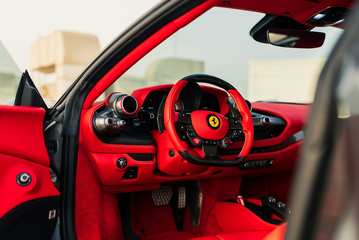 The Tuatara distinguishes itself with an aerodynamic profile that remains stable at velocities where other cars would generate dangerous lift. With a verified speed of 295 mph, it firmly holds its ground. It is a testament to American grit, proving that a boutique manufacturer from Washington State can trade blows with European giants. For enthusiasts researching the fastest cars in the world, the Tuatara is a reminder that displacement and turbocharging are still a winning combination.
Yangwang U9 Xtreme: The Electric Paradigm Shift
September 2025 changed the conversation surrounding electric vehicles (EVs) forever. The Yangwang U9 Xtreme, a specialized variant from BYD’s luxury arm, clocked 308 mph on a German runway. This wasn’t just a win for EV technology; it was a dominance display.
The U9 Xtreme utilizes a quad-motor setup delivering 3,000 horsepower. However, the secret sauce is the 1,200-volt architecture, allowing for sustained high-output energy discharge without the thermal throttling that plagued early electric hypercars. With a limited run of 30 units, obtaining one is nearly impossible without deep connections in the Asian market. The U9 proves that battery weight is no longer the handicap it once was, securing its place on the list of the fastest cars in the world.
The Grandmasters: Luxury Meets Velocity
Speed is often violent, but some manufacturers believe it should be delivered with a velvet glove. These vehicles offer stratospheric performance wrapped in bespoke luxury.
Bugatti Tourbillon: The Analog Watch in a Digital Age
Replacing the Chiron was never going to be easy, but the Bugatti Tourbillon has succeeded by looking backward to move forward. In an era of downsizing, Bugatti did the unthinkable: they built a naturally aspirated V16 engine and paired it with a high-performance hybrid system.
The result is 1,800 horsepower and an exhaust note that sounds like tearing canvas. The Tourbillon is less of a car and more of a mechanical sculpture. It creates a sense of occasion that no EV can replicate. Hitting 60 mph in under 2.0 seconds, it is brutal yet refined. With a price tag exceeding $4 million, owners will need to secure specialized luxury car insurance that covers not just the vehicle, but the appreciation in value this instant classic is guaranteed to accrue. It remains a crown jewel among the fastest cars in the world.
Hennessey Venom F5: The Texas Tornado
Hennessey Performance Engineering operates on a simple philosophy: “make it faster.” The Venom F5 is built around a carbon fiber tub and powered by a 6.6-liter “Fury” V8. With 1,817 horsepower pushing a chassis that weighs less than a Ford Focus, the power-to-weight ratio is terrifying.
The F5 is raw. It lacks the driver aids and comforts of a Bugatti, demanding total focus from the pilot. Currently verified at 272 mph, Hennessey is actively targeting the 300 mph barrier. For those who feel modern supercars have become too sanitized, the Venom F5 offers an analog connection to the road that is increasingly rare among the fastest cars in the world.
The Electric Vanguards: Silent Velocity
While combustion engines provide the drama, electric motors provide the efficiency. These cars leverage instantaneous torque to alter our perception of acceleration.
Rimac Nevera R: The Software Sovereign
Mate Rimac is arguably the most important figure in modern automotive engineering. The Nevera R is the sharpened, track-focused evolution of the record-breaking Nevera. With power bumped to 2,107 horsepower, it utilizes complex torque vectoring algorithms to manage traction at each wheel thousands of times per second.
The Nevera R doesn’t just accelerate; it teleports. The 0-60 mph time of 1.7 seconds is physically uncomfortable for the unprepared. However, unlike many EVs that run out of breath at high speeds, the Nevera R charges on to 267 mph. It is a technical masterpiece that has forced legacy brands to rethink their electrification strategies to remain relevant in the conversation of the fastest cars in the world.
Aspark Owl: The Low-Slung Assassin
Japan’s Aspark Owl is an exercise in minimalism. Standing less than 40 inches tall, it slices through the air with minimal resistance. Its quad-motor setup delivers 1,953 horsepower, and while its top speed of 256 mph is lower than the Jesko, its acceleration is its party piece. The Owl held the acceleration record for years and remains one of the quickest vehicles off the line. It is a niche product for the collector who values obscurity and extreme engineering.
Unique Engineering Marvels
Not every car chases the same metric. Some prioritize airflow, while others reinvent the transmission.
McLaren Speedtail: The Aero-Hyper-GT
The McLaren Speedtail is the spiritual successor to the F1, retaining the iconic central driving position. It is not a track weapon; it is a “Hyper-GT” designed to cross continents at 250 mph. The bodywork is elongated to smooth out airflow, eliminating the need for large wings.
 The Speedtail uses a hybrid powertrain to fill in the torque gaps of the twin-turbo V8. It is one of the most comfortable entries on the list of the fastest cars in the world. The experience of driving typically involves three people, sharing the rush of speed in a cabin that feels more like a private jet than a car.
Koenigsegg Regera: The Gearless Wonder
The Regera is unique because it features no traditional transmission. The Koenigsegg Direct Drive (KDD) system uses a hydraulic coupling to send power from the engine and electric motors directly to the wheels. This means the car pulls from 0 to 250 mph in one seamless surge, without the interruption of shifting gears. It is a sensation unlike anything else on the road—a relentless, linear wave of force that defines the Regera’s character.
Accessible Velocity: The Real-World Supercars
While hypercars capture the headlines, the “sub-200 mph” category offers performance that is actually usable on public roads. These vehicles represent the pinnacle of what a daily driver can be.
Mercedes-AMG GT 63 S E Performance
The latest AMG GT is a brute. utilizing Formula 1-derived hybrid technology, it pairs a V8 with an electric motor for instant response. While it tops out at 196 mph, the way it gets there is thunderous. It is a heavy car, but rear-wheel steering and active suspension make it dance like a much lighter vehicle. For executives who need speed, looking into commercial fleet financing for a stable of these vehicles is not unheard of.
BMW M8 Competition Gran Coupe
The M8 is the ultimate autobahn cruiser. It can sit at 150 mph all day in total comfort. With the M Driver’s Package, the limiter is raised to 190 mph. It features one of the best infotainment systems in the business and a suspension system that can switch from compliant to rigid at the touch of a button. It is a sleeper among the fastest cars in the world, often overlooked but never underestimated.
Audi RS7 Performance
Sharing the same 4.0-liter V8 lineage as other VW Group products, the RS7 is the choice for the design-conscious. Its sportback silhouette is iconic. While slightly slower at the top end than the M8, its Quattro all-wheel-drive system makes it an absolute weapon in inclement weather. It brings supercar acceleration to a vehicle that can carry luggage and four adults.
Lexus LC500
The Lexus LC500 is an outlier. It isn’t the fastest, topping out at 168 mph, but it is arguably the best sounding. Its naturally aspirated 5.0-liter V8 is a dying breed. The interior quality surpasses cars costing double the price. It reminds us that speed is a sensation, not just a number.
The Financial Reality of Hyper-Speed
Entering the market for the fastest cars in the world is a significant financial undertaking that goes beyond the sticker price. Whether you are acquiring a Bugatti or a limited-run Koenigsegg, the logistics are complex.
Supercar financing has evolved into a specialized financial product. Banks now offer balloon payments and lease structures that account for the vehicle’s potential appreciation. Unlike a standard sedan that depreciates the moment it leaves the lot, a build slot for a Venom F5 or a Gordon Murray T.50 can increase in value before the car is even built.
Furthermore, protecting these assets is critical. Standard auto policies are insufficient. Owners must seek out luxury car insurance providers who understand agreed-value policies. These policies ensure that if a carbon-fiber fender is damaged, the payout covers the astronomical cost of repair at the factory in Modena or Ängelholm.
Conclusion: The Future of Speed
As we look beyond 2025, the definition of the fastest cars in the world will continue to evolve. We are approaching the limits of tire technology and human reaction times. The next frontier may not be higher top speeds, but how that speed is delivered—perhaps through solid-state batteries or hydrogen-hybrid powertrains.
However, one thing remains constant: the thrill. Whether it is the silent g-force of a Rimac or the mechanical scream of a Bugatti V16, the desire to move faster is intrinsic to our nature. These machines are the apex predators of the asphalt, monuments to what is possible when engineering constraints are removed.
Are You Ready to Step Into the Fast Lane?
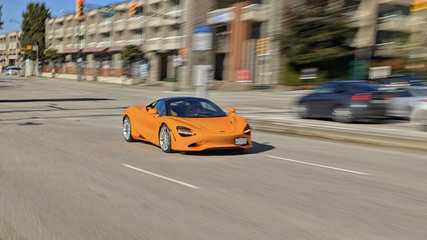 The world of hyper-performance is exclusive, but it is waiting for those bold enough to enter. If you are ready to transition from spectator to owner, now is the time to act. Researching the market is your first defense against depreciation. Check your eligibility for high-performance vehicle loans today, compare exotic car insurance quotes to understand the true cost of ownership, and find a reputable specialist dealer who can guide you toward the machine that matches your driving style. The road is open—drive it.