
Velocity Redefined: The Definitive Guide to the Fastest Cars in the World 2025
The pursuit of velocity is more than a metric; it is the automotive industry’s most enduring arms race. Over the last decade, I
have watched the goalposts move from the “Holy Grail” of 200 mph to the once-unfathomable 300 mph barrier. We are living through a golden era of engineering, a specific moment in time where the raw mechanical soul of internal combustion is clashing with the silent, violent torque of electrification.
As we navigate 2025, the landscape of high-performance motoring has shifted. It is no longer enough to simply slap turbos on a V8; today’s hypercars are studies in active aerodynamics, thermal management, and material science. For the enthusiast and the collector, identifying the fastest cars in the world 2025 is about understanding the nuance between theoretical physics and paved reality.
In this comprehensive analysis, we will dissect the current hierarchy of speed. We will look beyond the brochures and explore the engineering marvels that are redefining what it means to be a production vehicle in the modern age.
The Stratosphere: Breaking the 300 MPH Barrier
At the absolute apex of the market, a select few manufacturers are engaged in a dogfight for the title of the absolute king of speed. These vehicles are barely road-legal, designed with one singular purpose: to conquer air resistance.
Koenigsegg Jesko Absolut: The King of Sweeden
Christian von Koenigsegg does not build cars that follow trends; he builds cars that humiliate physics. The Jesko Absolut is the current theoretical king among the fastest cars in the world 2025. Unlike its track-focused sibling, the Absolut ditches the massive rear wing for a pair of fighter-jet-inspired fins, lowering the drag coefficient to a slippery 0.278 Cd.
Under the carbon fiber skin lies a 5.0-liter twin-turbo V8 running on E85 fuel, generating a mind-bending 1,600 horsepower. But the magic here isn’t just the engine; it is the “Light Speed Transmission” (LST), which shifts gears virtually instantly. While a verified top speed run is still pending, simulations and dyno data suggest this car is capable of surpassing 310 mph (499 km/h). For collectors looking to buy used hypercars or secure an allocation, Koenigsegg remains the blue-chip investment of the hypercar world.
SSC Tuatara: American Engineering Strikes Back
The road to redemption for SSC North America has been long, but the Tuatara has cemented its place in history. Powered by a Nelson Racing Engines twin-turbo V8, this American-made monster produces 1,750 horsepower. Following early controversies regarding telemetry data, SSC put the car through rigorous, verified testing, achieving a two-way average of 295 mph.
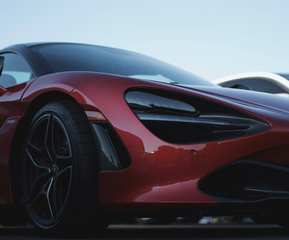 The Tuatara distinguishes itself with a raw, visceral driving experience that is becoming rare in an era of sanitized performance. It proves that American engineering can stand toe-to-toe with the European giants. For those researching exotic car leasing options, the Tuatara represents a unique opportunity to drive a record-holder that doesn’t carry the typical European badge premium, though it remains an exclusive, multi-million dollar asset.
Hennessey Venom F5: The Texas Tornado
Everything is bigger in Texas, including the horsepower figures. John Hennessey’s team has created a vehicle that is less of a car and more of a ballistic missile. The Venom F5 is built around a bespoke carbon tub and powered by the “Fury” engine—a 6.6-liter twin-turbo V8 churning out 1,817 horsepower.
The goal for Hennessey is clear: breach 300 mph. Currently verified at speeds over 270 mph, the F5 is in active development to claim the title of the fastest cars in the world 2025. Unlike the complex hybrid systems of its rivals, the Venom F5 relies on brute force and lightweight construction. It is a car for the purist who believes that driver skill should still be a primary factor in high-speed runs.
The Electric Uprising: Silent Velocity
The narrative of 2025 is incomplete without acknowledging the dominance of electric propulsion. EVs have moved beyond being “quick off the line” to becoming genuine top-speed contenders.
Rimac Nevera R: The Croatian Masterpiece
Mate Rimac has effectively become the chaotic good genius of the automotive world. The original Nevera was a revelation, but the Nevera R is a revolution. With 2,107 horsepower generated by four independent motors, this car offers torque vectoring capabilities that internal combustion engines simply cannot replicate.
The Nevera R hits 60 mph in 1.74 seconds. Let that sink in. By the time you finish reading this sentence, the car is already exceeding highway speed limits. With a top speed of 267 mph, it proves that batteries can sustain high-end velocity. For tech-focused buyers, the Rimac represents the future of luxury performance vehicles, offering a blend of grand touring comfort and face-melting acceleration.
Yangwang U9 Xtreme: The New Challenger
A few years ago, the idea of a Chinese supercar challenging Bugatti would have been laughable. Today, it is a reality. The Yangwang U9 Xtreme has sent shockwaves through the industry by clocking 308 mph on a test track. Utilizing a quad-motor setup and a cutting-edge 1,200V architecture, the U9 solves the biggest issue of high-performance EVs: thermal throttling.
Production is strictly limited, creating a frenzy among collectors. This vehicle highlights the rapid pace of innovation in the Asian market and serves as a wake-up call to legacy manufacturers. As supercar insurance quotes for EVs begin to stabilize, we are seeing more collectors diversify their garages with high-performance electric platforms like the U9.
Aspark Owl: The Acceleration King
Hailing from Japan, the Aspark Owl is an exercise in minimalism. It is incredibly low, incredibly light, and incredibly fast. While its top speed of 256 mph is “modest” compared to the Jesko, its acceleration is its party trick. It treats 0-60 mph sprints with contempt, dispatching them in under 1.7 seconds. The Owl is a niche vehicle, often overlooked in mainstream conversations about the fastest cars in the world 2025, but for the connoisseur of Japanese engineering, it is a masterpiece of efficiency.
The Old Guard: Luxury Meets Mach 1
Speed is not always about stripping a car down to bare carbon fiber. Some buyers demand that their 250 mph run comes with air conditioning, heated leather seats, and a bespoke sound system.
Bugatti Tourbillon: The Art of the V16
When Bugatti retired the W16 engine, the world held its breath. The successor, the Tourbillon, did not disappoint. It features a naturally aspirated V16 engine paired with a hybrid system, producing 1,800 horsepower. It is a mechanical watch made into a car—complex, beautiful, and timeless.
The Tourbillon is not just one of the fastest cars in the world 2025; it is arguably the most luxurious. It launches to 60 mph in 2.0 seconds, but it does so with a level of refinement that makes 200 mph feel like 50. Securing luxury car financing for a vehicle of this magnitude often requires specialized private banking relationships, as these are viewed less as cars and more as appreciating assets.
McLaren Speedtail: The Aero-Focused GT
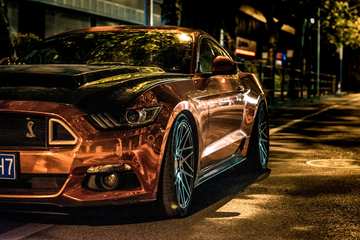 The McLaren Speedtail is the spiritual successor to the iconic F1, featuring the beloved three-seat layout. It is not a track car; it is a “Hyper-GT.” The elongated tail is designed to smooth airflow, allowing the car to glide to 250 mph without the need for aggressive wings.
Driving a Speedtail is a unique experience. The central driving position offers unrivaled visibility and a sense of occasion that standard two-seaters lack. It remains one of the most elegant solutions to the problem of aerodynamic drag.
Real-World Performance: The accessible Supercars
While the multi-million dollar hypercars grab the headlines, the “accessible” supercar market has never been more potent. These are the vehicles that you can drive to the office on Friday and take to the track on Saturday.
Mercedes-AMG GT 63 S E Performance
The name is a mouthful, but the performance is undeniable. By combining a twin-turbo V8 with a rear-mounted electric motor, AMG has created a coupe that offers instant throttle response and a top speed approaching 196 mph. It is a brute in a tuxedo, offering the latest safety tech and high-performance auto loans availability that makes it attainable for the upper-middle-class enthusiast.
BMW M8 Competition & Audi RS7 Performance
The German rivalry continues to produce spectacular results. The M8 Competition is a grand tourer that thinks it’s a sports car, capable of 190 mph with the Driver’s Package. Conversely, the Audi RS7 Performance brings supercar speed to a four-door chassis. Both cars utilize 4.0-liter V8s that are tuners’ dreams. For those looking at investment grade automobiles, these models hold their value well, particularly limited-edition trims.
The Economics of Speed: Buying and Owning in 2025
Acquiring one of the fastest cars in the world 2025 is a complex process that goes beyond simply writing a check. The market has matured, and the financial ecosystem surrounding these vehicles is sophisticated.
Financing and Insurance
Whether you are looking to buy used hypercars or commission a new build, liquidity is key. Specialized lenders now offer luxury car financing with balloon payments and terms that account for the vehicle’s appreciation curve. Standard auto loans do not apply here; these are structured closer to mortgage products or art loans.
Furthermore, supercar insurance quotes have evolved. Insurers now require detailed usage profiles. Are you tracking the car? Is it stored in a climate-controlled facility? For the Yangwang or Rimac, insurers also assess battery management risks.
The Investment Angle
Vehicles like the Bugatti Tourbillon or the Koenigsegg Jesko are rarely depreciating assets. In the current economic climate, high-net-worth individuals are using these cars as hedges against inflation. The key is provenance and mileage. A delivery-mileage SSC Tuatara is a liquid asset; a high-mileage daily driver is a liability.
Conclusion: The Future is Fast
As we look at the roster of the fastest cars in the world 2025, it is clear that we are not slowing down. The blend of internal combustion heritage and electric innovation has created a spectrum of performance that was unimaginable a decade ago. From the raw American power of the Hennessey Venom F5 to the silent, computerized precision of the Rimac Nevera R, there is a flavor of speed for every billionaire’s palate.
However, reading about these machines is only the first step. The visceral experience of G-force cannot be conveyed through text. The sound of a V16 intake or the whine of an electric motor at 300 mph must be felt to be understood.
Are you ready to transcend the ordinary?
 Whether you are in the market to acquire a piece of automotive history or simply looking to upgrade your current garage, the time to act is now. Allocations for these top-tier machines are vanishingly rare. We recommend consulting with a specialist broker to discuss your luxury car financing options or to explore current inventory. Don’t just watch the revolution pass you by—get behind the wheel and experience the pinnacle of human engineering for yourself.