



Ferrari 296 GTB: A New Hybrid Paradigm Shakes the Supercar Landscape
For a decade, I’ve witnessed the relentless evolution of the supercar segment, a constant arms race for horsepower, speed, and audacious
 design. In this landscape, disruption is the only constant. The arrival of the Ferrari 296 GTB in 2022 wasn’t just another model update; it was a seismic shift. It boldly traded Maranello’s legendary twin-turbo V8 for a potent, electrically augmented V6, setting a new benchmark in a segment just beginning its transition to hybrid propulsion. Now, with rivals like the 903bhp, 10,000rpm Lamborghini Temerario on the horizon, the 296 GTB’s electrifying V6 hybrid supercar prowess remains a deeply impressive, and arguably, the benchmark.
The supercar establishment often clings to tradition, and for years, the Lamborghini Huracán, with its sonorous naturally aspirated V10, and the McLaren 720S, with its formidable twin-turbo V8, were the established titans. The Huracán, in its prime, offered an unparalleled sensory experience, prioritizing auditory drama and analogue feedback. The McLaren 720S, an evolution of an existing theme, championed the art of power-to-weight supremacy. But the 296 GTB, with its 819bhp hybrid powertrain, represents Ferrari’s decisive leap forward. Now, the upcoming Lamborghini Temerario, promising an astonishing 903bhp and a mind-boggling 10,000rpm redline from its twin-turbo V8 hybrid setup, stands as Lamborghini’s direct challenge, a signal that the stakes have never been higher in the hybrid supercar market.
Indeed, the 296 GTB’s sheer firepower is undeniable. Its entirely new 120-degree, twin-turbo V6, augmented by an electric motor, exclusively drives the rear wheels – a departure from the four-wheel-drive system found in the SF90. This configuration results in an awe-inspiring 819bhp, shattering conventional supercar expectations. The question inevitably arises: where does this relentless pursuit of power end, and more importantly, where can one truly harness such performance? While these are philosophical debates for another time, the 296 GTB’s technical achievements are concrete and game-changing.
This marque represents a pivotal moment for Ferrari. It is the first V6-powered Ferrari road car to wear the Prancing Horse emblem (the iconic 246 GT Dino, while bearing a V6, predated Ferrari’s official road car badging). It also debuts Ferrari’s ‘hot-vee’ turbocharger installation, a design that places the turbos within the cylinder banks for improved packaging and faster response. As a plug-in hybrid, it offers a respectable 15-mile EV-only range, enabling silent, emission-free city driving. The compact V6 engine is mounted low in a bespoke aluminum chassis, with a wheelbase 50mm shorter than its V8 predecessors, and the occupants are positioned slightly further forward, contributing to an even more focused driving dynamic.
The electric motor contributes a substantial 165bhp and 232lb ft of torque, while the V6 alone produces a staggering 654bhp and 546lb ft. Combined, these figures result in the headline 819bhp. Ferrari, perhaps acknowledging the complexity of synergistic power delivery, refrains from quoting a combined peak torque figure, but it’s safe to assume it’s “considerable.” Remarkably, this V6 unit is 30kg lighter than a comparable V8. It’s mated to a lightning-fast eight-speed dual-clutch transmission, and the compact battery pack, a long, slender unit, is cleverly housed behind the seats.
No Ferrari is complete without a suite of sophisticated electronic chassis management systems, and the 296 is no exception. Ferrari has introduced its six-axis sensor, dubbed the 6w-CDS (Chassis Dynamic Sensor), which meticulously measures acceleration and rotational velocity across the X, Y, and Z planes. This advanced sensor replaces traditional yaw rate sensors and, in conjunction with a sensor on the steering rack, provides the car with an intimate understanding of both driver inputs and instantaneous grip levels at the tire contact patch. This data is then fed into systems like Side Slip Control and the active E-Diff, orchestrating maximum cornering speed with unwavering stability and security. A new ABS-evo system, active in RACE mode and above, leverages the brake-by-wire technology to dramatically shorten braking distances and enhance braking performance during trail braking into corners, a testament to the performance tuning of hybrid supercars.
For the first time, Ferrari has deployed its active aerodynamics not to reduce drag, but to generate downforce. The firm claims an impressive 360kg of downforce at 155mph, with up to 100kg derived from a deployable rear wing. The cooling system is equally intricate. Two radiators in the front handle engine and gearbox cooling, supplemented by two condensers for the battery. Hot air is expelled underneath to avoid interfering with the cooling air directed to the intercoolers along the car’s flanks. Small apertures below the headlamps are dedicated to brake cooling, while a roofline-integrated rear wing creates a “virtual” rear screen, channeling airflow towards the car’s rear. The majority of the 296’s downforce is generated from its underbody, where meticulous attention has been paid to airflow management, the rear diffuser, and crucially, the ground clearance, maximizing the effectiveness of these downforce-generating surfaces. This focus on aerodynamic efficiency in hybrid supercars is paramount.
The 296 GTBs we sampled on track were all equipped with the optional Assetto Fiorano package. This upgrades the standard dampers to racing-derived Multimatic units and adds carbon fiber aerodynamic elements to the front splitter, increasing front downforce by an additional 20kg. The package also incorporates more carbon fiber in the cabin and exterior, shaving a further 12kg from the overall weight. Opting for the Lexan rear engine cover reduces weight by an additional 3kg. For those seeking the ultimate grip, Michelin Pilot Sport Cup 2 R tires replace the standard Pilot Sport 4S. The Assetto Fiorano package also offers an optional exterior graphics package, a nod to the iconic 250LM of the 1960s. Visually, the 296 GTB is a stunner, a departure from the norm, drawing subtle inspiration from motorsport heritage without succumbing to overt pastiche.
Getting the 296 GTB moving is a simple affair. A double press on the lower steering wheel boss and a select of first gear initiate the drive. The car defaults to Hybrid mode, utilizing electric power for initial acceleration unless prompted otherwise via the haptic controls on the steering wheel. Gentle throttle application allows for purely electric propulsion, provided the battery has sufficient charge. For those who wish to immerse themselves in the electric experience, a dedicated EV mode can be selected, overriding all other powertrain demands. Beyond this, there are Performance and Qualifying modes. In Performance mode, both power sources collaborate to deliver exhilarating acceleration while also working to maintain battery charge. Qualifying mode unleashes the full, unadulterated fury of the powertrain, with no regard for battery state of charge, truly embodying the ultimate hybrid supercar performance.
design. In this landscape, disruption is the only constant. The arrival of the Ferrari 296 GTB in 2022 wasn’t just another model update; it was a seismic shift. It boldly traded Maranello’s legendary twin-turbo V8 for a potent, electrically augmented V6, setting a new benchmark in a segment just beginning its transition to hybrid propulsion. Now, with rivals like the 903bhp, 10,000rpm Lamborghini Temerario on the horizon, the 296 GTB’s electrifying V6 hybrid supercar prowess remains a deeply impressive, and arguably, the benchmark.
The supercar establishment often clings to tradition, and for years, the Lamborghini Huracán, with its sonorous naturally aspirated V10, and the McLaren 720S, with its formidable twin-turbo V8, were the established titans. The Huracán, in its prime, offered an unparalleled sensory experience, prioritizing auditory drama and analogue feedback. The McLaren 720S, an evolution of an existing theme, championed the art of power-to-weight supremacy. But the 296 GTB, with its 819bhp hybrid powertrain, represents Ferrari’s decisive leap forward. Now, the upcoming Lamborghini Temerario, promising an astonishing 903bhp and a mind-boggling 10,000rpm redline from its twin-turbo V8 hybrid setup, stands as Lamborghini’s direct challenge, a signal that the stakes have never been higher in the hybrid supercar market.
Indeed, the 296 GTB’s sheer firepower is undeniable. Its entirely new 120-degree, twin-turbo V6, augmented by an electric motor, exclusively drives the rear wheels – a departure from the four-wheel-drive system found in the SF90. This configuration results in an awe-inspiring 819bhp, shattering conventional supercar expectations. The question inevitably arises: where does this relentless pursuit of power end, and more importantly, where can one truly harness such performance? While these are philosophical debates for another time, the 296 GTB’s technical achievements are concrete and game-changing.
This marque represents a pivotal moment for Ferrari. It is the first V6-powered Ferrari road car to wear the Prancing Horse emblem (the iconic 246 GT Dino, while bearing a V6, predated Ferrari’s official road car badging). It also debuts Ferrari’s ‘hot-vee’ turbocharger installation, a design that places the turbos within the cylinder banks for improved packaging and faster response. As a plug-in hybrid, it offers a respectable 15-mile EV-only range, enabling silent, emission-free city driving. The compact V6 engine is mounted low in a bespoke aluminum chassis, with a wheelbase 50mm shorter than its V8 predecessors, and the occupants are positioned slightly further forward, contributing to an even more focused driving dynamic.
The electric motor contributes a substantial 165bhp and 232lb ft of torque, while the V6 alone produces a staggering 654bhp and 546lb ft. Combined, these figures result in the headline 819bhp. Ferrari, perhaps acknowledging the complexity of synergistic power delivery, refrains from quoting a combined peak torque figure, but it’s safe to assume it’s “considerable.” Remarkably, this V6 unit is 30kg lighter than a comparable V8. It’s mated to a lightning-fast eight-speed dual-clutch transmission, and the compact battery pack, a long, slender unit, is cleverly housed behind the seats.
No Ferrari is complete without a suite of sophisticated electronic chassis management systems, and the 296 is no exception. Ferrari has introduced its six-axis sensor, dubbed the 6w-CDS (Chassis Dynamic Sensor), which meticulously measures acceleration and rotational velocity across the X, Y, and Z planes. This advanced sensor replaces traditional yaw rate sensors and, in conjunction with a sensor on the steering rack, provides the car with an intimate understanding of both driver inputs and instantaneous grip levels at the tire contact patch. This data is then fed into systems like Side Slip Control and the active E-Diff, orchestrating maximum cornering speed with unwavering stability and security. A new ABS-evo system, active in RACE mode and above, leverages the brake-by-wire technology to dramatically shorten braking distances and enhance braking performance during trail braking into corners, a testament to the performance tuning of hybrid supercars.
For the first time, Ferrari has deployed its active aerodynamics not to reduce drag, but to generate downforce. The firm claims an impressive 360kg of downforce at 155mph, with up to 100kg derived from a deployable rear wing. The cooling system is equally intricate. Two radiators in the front handle engine and gearbox cooling, supplemented by two condensers for the battery. Hot air is expelled underneath to avoid interfering with the cooling air directed to the intercoolers along the car’s flanks. Small apertures below the headlamps are dedicated to brake cooling, while a roofline-integrated rear wing creates a “virtual” rear screen, channeling airflow towards the car’s rear. The majority of the 296’s downforce is generated from its underbody, where meticulous attention has been paid to airflow management, the rear diffuser, and crucially, the ground clearance, maximizing the effectiveness of these downforce-generating surfaces. This focus on aerodynamic efficiency in hybrid supercars is paramount.
The 296 GTBs we sampled on track were all equipped with the optional Assetto Fiorano package. This upgrades the standard dampers to racing-derived Multimatic units and adds carbon fiber aerodynamic elements to the front splitter, increasing front downforce by an additional 20kg. The package also incorporates more carbon fiber in the cabin and exterior, shaving a further 12kg from the overall weight. Opting for the Lexan rear engine cover reduces weight by an additional 3kg. For those seeking the ultimate grip, Michelin Pilot Sport Cup 2 R tires replace the standard Pilot Sport 4S. The Assetto Fiorano package also offers an optional exterior graphics package, a nod to the iconic 250LM of the 1960s. Visually, the 296 GTB is a stunner, a departure from the norm, drawing subtle inspiration from motorsport heritage without succumbing to overt pastiche.
Getting the 296 GTB moving is a simple affair. A double press on the lower steering wheel boss and a select of first gear initiate the drive. The car defaults to Hybrid mode, utilizing electric power for initial acceleration unless prompted otherwise via the haptic controls on the steering wheel. Gentle throttle application allows for purely electric propulsion, provided the battery has sufficient charge. For those who wish to immerse themselves in the electric experience, a dedicated EV mode can be selected, overriding all other powertrain demands. Beyond this, there are Performance and Qualifying modes. In Performance mode, both power sources collaborate to deliver exhilarating acceleration while also working to maintain battery charge. Qualifying mode unleashes the full, unadulterated fury of the powertrain, with no regard for battery state of charge, truly embodying the ultimate hybrid supercar performance.
 The sensation of gliding silently through urban landscapes is an unexpected pleasure, and the sophisticated damping makes it a remarkably comfortable touring machine. There’s even a practical luggage compartment in the front ‘frunk,’ a welcome addition absent in the SF90. But the question that lingers for any enthusiast is: what does it feel like when both the V6 and electric motor are unleashed in earnest? The answer lies in what happens when you bury the throttle in a high gear at low revs. The 296 simply rockets forward, with zero perceptible lag, making you momentarily question the need for gears, such is its immediate potency. However, with eight gears to exploit and an engine that willingly revs to 8500rpm, unleashing the 296 GTB’s full potential is an absolutely astonishing experience. The acceleration figures, which hint at sub-3-second 0-60mph times and impressive top speeds, translate into a visceral sensation of relentless forward momentum that verges on the overwhelming, yet is undeniably addictive. This is a seriously rapid machine, and its soundtrack, a potent blend of turbo whistle and a tuneful V6 rasp, is utterly captivating. This combination of raw speed and evocative sound is a hallmark of next-generation hybrid supercars.
The responsiveness of the 296 GTB’s chassis is truly remarkable. Ferrari’s promise of a “fun to drive” car is not an overstatement. It feels incredibly agile without ever becoming nervous or skittish. The steering is, as expected from Ferrari, light and exceptionally quick, but it also delivers a surprising amount of tactile feedback. While grip levels are predictably immense, the car remains remarkably throttle-adjustable, inviting playful use of the accelerator and eliciting genuine grins. Despite its dry weight of 1470kg, the 296 feels significantly lighter, exhibiting a remarkable lack of inertia that encourages a fluid, intuitive driving style. Small, precise inputs are rewarded with immediate and accurate responses. Engaging ‘CT Off’ mode provides a safety net of electronic intervention, offering reassurance even during audacious maneuvers. However, even with all electronic aids deactivated, the 296’s inherent balance allows for a level of adjustability and controlled oversteer that you might not expect from a car producing 819bhp, demonstrating its mastery in supercar handling dynamics.
On the track, the 296 GTB possesses the uncanny ability to make even the longest straights feel shorter. It transforms into an incredibly sharp instrument, where power is readily available to break rear-end traction at multiple points around a lap. Crucially, the 296 is highly sensitive to braking and steering inputs, rewarding precision and deliberate control. The turn-in accuracy and immediate response dramatically shorten the cornering phases. Instead of gradually loading the chassis, the 296 settles instantly, aided by the Multimatic dampers and the hyper-quick steering, which complements the enhanced body control offered by the Assetto Fiorano setup. Even for drivers accustomed to more conventional sports cars, the sheer speed, precision, and agility of the 296 GTB are phenomenal and an enduring source of joy, lap after lap. This is the pinnacle of track-focused hybrid supercar engineering.
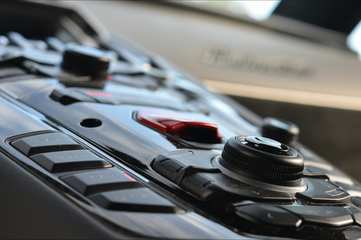
The interior architecture of the 296 GTB will feel familiar to those who have experienced the SF90 Stradale. The all-digital interface and its accompanying haptic switchgear, liberally applied to the steering wheel and surrounding pods, are undeniably complex. While there’s a vast amount of information to convey, the primary challenge lies in the occasional need for a second press to register an input, or the uncertainty of whether a press has been successful at all. Despite these usability quirks, the cabin exudes a special, focused ambiance, befitting a luxury hybrid supercar interior.
The ultimate verdict on the 296 GTB from esteemed automotive journalists often centers on its transformative impact. In their assessments, the gap between the Ferrari and its rivals, such as the McLaren Artura, was razor-thin, with judges often split. Those who favored the 296 GTB lauded its spectacular aesthetics, outrageous performance, astonishing tractability, and sophisticated engineering. The V6 engine was seen as a masterclass in downsizing, delivering unparalleled drama and exceeding McLaren’s efforts with the Artura in terms of control while offering a more playful and engaging driving experience. One renowned commentator even declared it the “first genuinely beautiful Ferrari since the F355,” a sentiment echoed by many. The hybrid system was praised for its seamless integration, proving less intrusive than feared, likely due to the widespread familiarity with the torque-rich characteristics of turbocharged V8 engines. The 296’s blistering speed is not its sole appeal; the character of the V6, with its ever-sweet soundtrack that evolves with throttle application, adds another layer of allure.
However, the hybridisation wasn’t without its critiques. A notable incident involved a battery failure leaving a car stranded, a situation Ferrari had warned of. This oversight, particularly from a company renowned for its advanced engineering, raised questions about the fail-safe mechanisms. Despite this, the consensus remained overwhelmingly positive. The Ferrari’s signature ultra-quick steering, while polarizing, and brake feel that didn’t quite match the very best were minor points against its “irresistibly seductive” nature. Many found themselves “bewitched” by its uncanny directional changes, phenomenal damping, and seemingly inexhaustible linearity of power. In essence, the 296 GTB was hailed as a significant return to form for Ferrari, surpassing the SF90 in its natural integration of hybrid technology and technical sophistication. It represents a distillation of lessons learned, resulting in one of Ferrari’s finest road-going machines, solidifying its position as a leader in innovative supercar technology.
The risk with heavily technologically laden vehicles is that they can become less than the sum of their parts. This was a concern with the SF90, which, while dazzling with its power, could feel somewhat inscrutable. The 296 GTB, however, is a different proposition. It strikes a perfect chord, blending potent performance with deeply engaging dynamics, redefining what a supercar in the £250,000-plus bracket can be. The anticipation for a more potent Versione Speciale variant, promising even greater performance and intensity, is palpable, with the hope that it retains the standard 296’s innate sense of natural feel.
It is precisely this aspect – the natural feel and inherent balance – that we hope Lamborghini has prioritized in its upcoming Temerario hybrid supercar. Over 900bhp is an obscene amount of power, and if not meticulously integrated with the rest of the vehicle’s dynamics, it can easily overwhelm the driver. Given the staggering success of the Revuelto, there’s reason for optimism that Lamborghini will nail the execution. If they do, we’re poised for an epic twin test between these hybrid titans. Alternatively, a triple threat including the McLaren 750S, now the “minnow” with “only” 740bhp, could offer a compelling comparison. Despite its lower power output, the McLaren’s featherlight 1389kg kerb weight gives it a competitive power-to-weight ratio. Its raw, ergonomic rightness, crisp steering, and deft chassis control offer a distinctly different, perhaps more analogue, experience compared to the Ferrari. The choice between these performance hybrid sports cars ultimately hinges on individual priorities.
For those seeking the pinnacle of hybrid supercar engineering and a driving experience that seamlessly blends raw power with refined agility, the Ferrari 296 GTB stands as a monumental achievement. It’s more than just a car; it’s a statement of intent, a glimpse into the future of automotive performance.
The sensation of gliding silently through urban landscapes is an unexpected pleasure, and the sophisticated damping makes it a remarkably comfortable touring machine. There’s even a practical luggage compartment in the front ‘frunk,’ a welcome addition absent in the SF90. But the question that lingers for any enthusiast is: what does it feel like when both the V6 and electric motor are unleashed in earnest? The answer lies in what happens when you bury the throttle in a high gear at low revs. The 296 simply rockets forward, with zero perceptible lag, making you momentarily question the need for gears, such is its immediate potency. However, with eight gears to exploit and an engine that willingly revs to 8500rpm, unleashing the 296 GTB’s full potential is an absolutely astonishing experience. The acceleration figures, which hint at sub-3-second 0-60mph times and impressive top speeds, translate into a visceral sensation of relentless forward momentum that verges on the overwhelming, yet is undeniably addictive. This is a seriously rapid machine, and its soundtrack, a potent blend of turbo whistle and a tuneful V6 rasp, is utterly captivating. This combination of raw speed and evocative sound is a hallmark of next-generation hybrid supercars.
The responsiveness of the 296 GTB’s chassis is truly remarkable. Ferrari’s promise of a “fun to drive” car is not an overstatement. It feels incredibly agile without ever becoming nervous or skittish. The steering is, as expected from Ferrari, light and exceptionally quick, but it also delivers a surprising amount of tactile feedback. While grip levels are predictably immense, the car remains remarkably throttle-adjustable, inviting playful use of the accelerator and eliciting genuine grins. Despite its dry weight of 1470kg, the 296 feels significantly lighter, exhibiting a remarkable lack of inertia that encourages a fluid, intuitive driving style. Small, precise inputs are rewarded with immediate and accurate responses. Engaging ‘CT Off’ mode provides a safety net of electronic intervention, offering reassurance even during audacious maneuvers. However, even with all electronic aids deactivated, the 296’s inherent balance allows for a level of adjustability and controlled oversteer that you might not expect from a car producing 819bhp, demonstrating its mastery in supercar handling dynamics.
On the track, the 296 GTB possesses the uncanny ability to make even the longest straights feel shorter. It transforms into an incredibly sharp instrument, where power is readily available to break rear-end traction at multiple points around a lap. Crucially, the 296 is highly sensitive to braking and steering inputs, rewarding precision and deliberate control. The turn-in accuracy and immediate response dramatically shorten the cornering phases. Instead of gradually loading the chassis, the 296 settles instantly, aided by the Multimatic dampers and the hyper-quick steering, which complements the enhanced body control offered by the Assetto Fiorano setup. Even for drivers accustomed to more conventional sports cars, the sheer speed, precision, and agility of the 296 GTB are phenomenal and an enduring source of joy, lap after lap. This is the pinnacle of track-focused hybrid supercar engineering.
The interior architecture of the 296 GTB will feel familiar to those who have experienced the SF90 Stradale. The all-digital interface and its accompanying haptic switchgear, liberally applied to the steering wheel and surrounding pods, are undeniably complex. While there’s a vast amount of information to convey, the primary challenge lies in the occasional need for a second press to register an input, or the uncertainty of whether a press has been successful at all. Despite these usability quirks, the cabin exudes a special, focused ambiance, befitting a luxury hybrid supercar interior.
The ultimate verdict on the 296 GTB from esteemed automotive journalists often centers on its transformative impact. In their assessments, the gap between the Ferrari and its rivals, such as the McLaren Artura, was razor-thin, with judges often split. Those who favored the 296 GTB lauded its spectacular aesthetics, outrageous performance, astonishing tractability, and sophisticated engineering. The V6 engine was seen as a masterclass in downsizing, delivering unparalleled drama and exceeding McLaren’s efforts with the Artura in terms of control while offering a more playful and engaging driving experience. One renowned commentator even declared it the “first genuinely beautiful Ferrari since the F355,” a sentiment echoed by many. The hybrid system was praised for its seamless integration, proving less intrusive than feared, likely due to the widespread familiarity with the torque-rich characteristics of turbocharged V8 engines. The 296’s blistering speed is not its sole appeal; the character of the V6, with its ever-sweet soundtrack that evolves with throttle application, adds another layer of allure.
However, the hybridisation wasn’t without its critiques. A notable incident involved a battery failure leaving a car stranded, a situation Ferrari had warned of. This oversight, particularly from a company renowned for its advanced engineering, raised questions about the fail-safe mechanisms. Despite this, the consensus remained overwhelmingly positive. The Ferrari’s signature ultra-quick steering, while polarizing, and brake feel that didn’t quite match the very best were minor points against its “irresistibly seductive” nature. Many found themselves “bewitched” by its uncanny directional changes, phenomenal damping, and seemingly inexhaustible linearity of power. In essence, the 296 GTB was hailed as a significant return to form for Ferrari, surpassing the SF90 in its natural integration of hybrid technology and technical sophistication. It represents a distillation of lessons learned, resulting in one of Ferrari’s finest road-going machines, solidifying its position as a leader in innovative supercar technology.
The risk with heavily technologically laden vehicles is that they can become less than the sum of their parts. This was a concern with the SF90, which, while dazzling with its power, could feel somewhat inscrutable. The 296 GTB, however, is a different proposition. It strikes a perfect chord, blending potent performance with deeply engaging dynamics, redefining what a supercar in the £250,000-plus bracket can be. The anticipation for a more potent Versione Speciale variant, promising even greater performance and intensity, is palpable, with the hope that it retains the standard 296’s innate sense of natural feel.
It is precisely this aspect – the natural feel and inherent balance – that we hope Lamborghini has prioritized in its upcoming Temerario hybrid supercar. Over 900bhp is an obscene amount of power, and if not meticulously integrated with the rest of the vehicle’s dynamics, it can easily overwhelm the driver. Given the staggering success of the Revuelto, there’s reason for optimism that Lamborghini will nail the execution. If they do, we’re poised for an epic twin test between these hybrid titans. Alternatively, a triple threat including the McLaren 750S, now the “minnow” with “only” 740bhp, could offer a compelling comparison. Despite its lower power output, the McLaren’s featherlight 1389kg kerb weight gives it a competitive power-to-weight ratio. Its raw, ergonomic rightness, crisp steering, and deft chassis control offer a distinctly different, perhaps more analogue, experience compared to the Ferrari. The choice between these performance hybrid sports cars ultimately hinges on individual priorities.
For those seeking the pinnacle of hybrid supercar engineering and a driving experience that seamlessly blends raw power with refined agility, the Ferrari 296 GTB stands as a monumental achievement. It’s more than just a car; it’s a statement of intent, a glimpse into the future of automotive performance.
 Ready to experience the future of supercar performance? Discover the Ferrari 296 GTB and explore your options for acquiring this groundbreaking hybrid masterpiece. Contact your local Ferrari dealership or visit our website to schedule a private consultation and learn more about the ultimate hybrid supercar driving experience.