
Title: From Track to Street: 10 Production Cars With Motorsport-Derived Engines
In the world of automotive engineering, the lines between the racetrack and the public road often blur, and some of the most compelling driver experiences come from cars that essentially transplant competition-bred components into road-going packages. These vehicles, carrying a pedigree forged in high-stakes racing, offer a visceral connection to motorsport, delivering raw performance and spine-tingling dynamics that transform everyday driving into a track-inspired adventure. But how does this race-bred DNA make its way from the grid to the dealership, and what benefits do automakers gain by investing in the costly arena of professional motorsports?
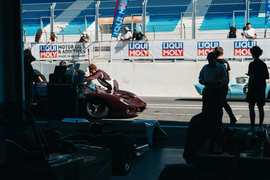
Motorsport and road-going vehicles have always been deeply intertwined, and racing serves as a proving ground for innovation. Manufacturers push their cars to the absolute limits in extreme competition environments, testing engineering tolerances, durability, and performance under pressure where failure is simply not an option. The knowledge, materials, and engineering advancements gained on the track often trickle down to the vehicles that consumers purchase. Whether it is pioneering advanced aerodynamic technologies, developing lighter materials, or introducing cutting-edge engine technologies, innovations forged in the crucible of racing inevitably pave the way for better road cars.
For example, crucial automotive technologies such as disc brakes and paddle shifters originated in motorsport before becoming standard features in production vehicles. Furthermore, success in racing significantly enhances a manufacturer’s brand image. If a company’s race cars dominate on the track, its road cars are perceived as more desirable and superior. While many enthusiasts may never have the opportunity to own a Formula 1 car or a Le Mans prototype, they can still experience a taste of the action, particularly when there is a race-bred engine roaring under the hood.
The “Win on Sunday, Sell on Monday” strategy is indeed experiencing a resurgence, as Original Equipment Manufacturers (OEMs) increase their participation in motorsport. This renewed commitment to racing could prove to be one of the most positive developments for the automotive industry in decades.
Alfa Romeo Montreal: A V8 Symphony Born From Endurance Racing
The Alfa Romeo Montreal houses a 2.6-liter V8 engine that originally derived from Alfa’s Tipo 33 sports prototype, an endurance racer that competed in prestigious events like the Targa Florio and the 24 Hours of Daytona. Although detuned for road use, the engine in the Montreal retains much of its motorsport character, revving up to 7,000 RPM and producing 200 horsepower. The intoxicating V8 exhaust note, combined with its sharp, angular styling, made the Montreal one of the most distinctive and underrated cars to ever carry Alfa Romeo’s badge.
BMW’s Motorsport Lineage: M1, M3, M5, and M6
BMW’s racing pedigree is evident in several of its most iconic models. The BMW M1, in particular, was powered by a 3.5-liter inline-six M88 engine derived directly from the brand’s racing programs, notably used in BMW’s M1 ProCar series. Later, the same engine found its way into the E24 M6 and E28 M5. Meanwhile, the E30 M3’s four-cylinder S14 engine was also based on the M88 and M12 turbocharged F1 engines. It drew inspiration from BMW’s touring car racing activities, sharing parts and engineering with the cars that dominated the DTM (Deutsche Tourenwagen Meisterschaft) racing series.
Chevrolet Camaro ZL1: A Road-Legal Drag Strip Legend
The 1969 Chevrolet Camaro ZL1 featured a 427 cubic-inch (7.0-liter) V8 engine originally developed for Can-Am racing. Constructed entirely from aluminum, this engine was exceptionally lightweight for its size and produced a staggering amount of power. While the engine was rated at 500 horsepower, it was detuned to 430 hp for the road-going version. The ZL1 package transformed the Camaro into a street-legal drag strip monster, and its engine lived on in several SCCA Trans-Am race cars. With only 69 examples ever built, the Camaro ZL1 remains an incredibly rare and highly sought-after model in today’s automotive market.
Ferrari Dino 206 GT: A Racing V6 for the Road
The Ferrari Dino 206 GT featured a 2.0-liter V6 engine that was originally developed for Ferrari’s Formula 2 cars in the 1960s. Although detuned for road use, the engine retained its high-revving nature, giving the Dino a racing spirit that made it an absolute joy to drive on winding roads. It produced 180 horsepower, which was more than enough power for a car weighing just over 2,000 pounds. The Dino was one of the few Ferraris that did not carry the official Ferrari badge and marked the Italian marque’s first foray into mid-engine V6 sports cars, setting a precedent for many future models.
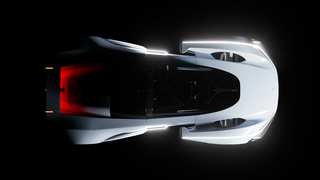
Ferrari F50: A Street-Legal Formula 1 Car
Created to commemorate the Italian marque’s 50th anniversary, the Ferrari F50 takes the concept of a track-derived engine to an entirely new level. Its 4.7-liter V12 was derived directly from Ferrari’s 1990 Formula 1 car, the Tipo 641 (later renamed F1-90), which was driven by the legendary Alain Prost. This naturally aspirated monster revs to 8,500 RPM and produces 513 horsepower, bringing the raw, unfiltered feel of a Formula 1 car to the public road. With only minimal modifications to meet regulatory requirements, the F50 was as close as a street-legal Ferrari could get to Formula 1 at the time.
Ford GT: A Modern Homage to Le Mans Glory
The Ford GT is a modern homage to one of the most legendary race cars of all time: the Le Mans-winning Ford GT40. The 2005 GT’s 5.4-liter supercharged V8 has its roots deeply embedded in the development of the automaker’s endurance racing engines, sharing relation with the power plant used in Ford’s Daytona Prototype race cars. Similarly, the newer 2017 GT also boasts motorsport-inspired performance, powered by a twin-turbocharged 3.5-liter V6 derived from Ford’s EcoBoost program used in endurance racing.
Jaguar XJ220: The World’s Fastest Production Car
One of the most iconic cars from the British marque, the Jaguar XJ220 was initially intended to feature a V12 engine, but it ultimately received a 3.5-liter twin-turbocharged V6 from the Jaguar XJR-11 Group C race car. This competition-derived engine allowed the XJ220 to achieve a top speed of 217 mph, making it the fastest production car in the world for a brief period. The XJ220’s motor was undoubtedly one of the most advanced and track-proven engines ever fitted into a road car.
Plymouth Belvedere: The “Race Hemi” for the Street
The 1964 Plymouth Belvedere might not appear to be a race car at first glance, but under the hood it housed the legendary 426 Hemi V8, an engine developed specifically for NASCAR. Known as the “Race Hemi,” this engine was a dominant force on the track and soon found its way into Plymouth’s production lineup. The road-going version of the Belvedere, which produced 425 hp, became one of the most powerful muscle cars of the 1960s – a reputation that the brand carried well into the 1970s with its legendary ‘Cuda.
Porsche 918 Spyder: A Hypercar with Racing DNA
The Porsche 918 Spyder features a 4.6-liter V8 engine based on the RS Spyder, a prototype race car that competed in the LMP2 class at the 24 Hours of Le Mans. The 918 combined this competition-derived engine with electric motors to produce a staggering 887 hp, allowing it to rocket from 0 to 60 mph in just 2.2 seconds (based on independent testing), making it one of the quickest production cars of all time. While electric motors contribute significantly to this blistering performance, it is the race-derived V8 that provides the car’s emotional and auditory thrills.
Porsche Carrera GT: The Ultimate Analog Supercar
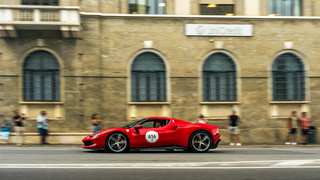
The Porsche Carrera GT is often regarded as one of the greatest analog supercars ever built, and much of its legend stems from the 10-cylinder engine that powers it. The 5.7-liter V10 was originally developed for Formula 1 during the V10 era. However, the project did not materialize, and the engine was shelved before eventually being used in a Le Mans prototype that never made it to the track. Instead, Porsche decided to utilize the race-built engine in its flagship supercar, allowing the Carrera GT to produce 612 hp and rev all the way