
Title: Pure Adrenaline: 10 Road-Ready Supercars with Authentic Race-Developed Engines
The Enduring Allure of Track-Tuned Heartbeats in Production Cars
There is an undeniable, electric thrill that vibrates through a driver when they experience a car with authentic motorsport DNA. This isn’t merely about aesthetics—the aggressive aerodynamics, the low-slung profiles, or the performance-oriented styling. It speaks to a deeper connection: the visceral sound, the high-strung responsiveness, and the unadulterated power derived from competition-grade machinery.
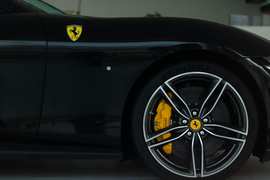
In this exploration, we journey deep into the mechanical soul of the industry, examining ten production vehicles that effectively blur the boundaries between the hallowed asphalt of professional racing circuits and the public thoroughfares. From soul-stirring V12s to finely tuned turbocharged power plants, these extraordinary machines offer a taste of the race track, delivering that inimitable sensation of piloting a purpose-built competition vehicle.
But before we dive into the mechanical specifics of these extraordinary creations, it is essential to understand the foundational business strategy that drives manufacturers to invest heavily in the world of motorsport—a world demanding astronomical budgets, relentless innovation, and the constant pursuit of victory. What compels them to pour millions into a venture that offers no immediate financial return? More importantly, how do these high-stakes investments eventually translate into the vehicles that grace our driveways?
The Inextricable Link Between Motorsport and Production Engineering
The relationship between high-performance race cars and standard production road vehicles is ancient, symbiotic, and deeply rooted in the very fabric of automotive engineering. For decades, motorsport has served as the most demanding proving ground imaginable. It is a crucible where engineers are forced to push the absolute limits of current technology—testing engine durability, aerodynamics, suspension dynamics, and material science in environments where failure is not merely costly, but catastrophic.
Every manufacturer that competes at the pinnacle of motorsport—whether in Formula 1, endurance racing like the 24 Hours of Le Mans, or competitive rally series—operates under a specific philosophy, often summarized as \”Win on Sunday, Sell on Monday.\” This foundational strategy reflects the understanding that victory on the track directly translates to increased market desirability for their road-going counterparts.
The trickle-down of technology is perhaps the most tangible benefit. Innovations that are indispensable for achieving tenths of a second on a leaderboard—advanced active aerodynamics, high-strength lightweight composites, bleeding-edge energy recovery systems, and sophisticated traction control protocols—inevitably make their way into production vehicles, becoming industry standards years or even decades later. The adoption of disc brakes, paddle shifters, and advanced driver-assistance systems (ADAS) are prime examples of technologies that were perfected in the demanding environment of racing before becoming commonplace features in standard consumer automobiles.
Furthermore, the psychological and economic impact of motorsport success is monumental. A manufacturer whose race car dominates the podium is instantly perceived as a leader in innovation, performance, and technological prowess. If a brand’s silhouette racer wins the 24 Hours of Nürburgring, its performance sedans immediately gain a halo of credibility. If its Formula 1 engine out-accelerates a rival on the straights, consumers associate that brand with speed and precision.
While the average consumer will never have the opportunity to pilot a Formula 1 machine or a Le Mans prototype in a professional race, the enduring appeal of these machines lies in the ability of manufacturers to capture that competition-derived spirit. When that distinct engine note—be it a high-revving V10, a snarling V8, or a high-output V6—roars from under the hood of a street-legal vehicle, the driver feels an undeniable connection to the track, a sensation that transcends the ordinary experience of driving.
In the modern era, the automotive industry has experienced a powerful resurgence in factory-backed factory-backed entries across various motorsport disciplines. This revival of \”Win on Sunday, Sell on Monday\” is arguably the most significant development in the automotive world over the past several decades, fostering an environment where technological innovation is driven by competition.
The Alfa Romeo Montreal
Venturing back to the golden age of 1960s European sports car design, the Alfa Romeo Montreal presents an iconic, avant-garde silhouette that continues to captivate enthusiasts worldwide. However, what sets this unique creation apart from its contemporaries is not its visually stunning aesthetics, but the remarkable powerplant nestled beneath its elongated front hood. The Alfa Romeo Montreal is powered by a 2.6-liter V8 engine that traces its lineage directly to the groundbreaking Alfa Romeo Tipo 33 sports prototype.
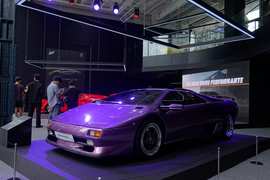
The Tipo 33 was not just a concept; it was a formidable competitor in the world of endurance racing, specifically designed to challenge the titans of the era at prestigious events such as the Targa Florio and the notoriously demanding 24 Hours of Daytona. While the engine housed within the road-going Montreal was strategically detuned to comply with road-going emissions regulations and daily usability requirements, it retained the essential character and soul of its track-bred sibling.
This high-revving powerplant effortlessly spins up to an exhilarating 7,000 RPM, delivering a robust 200 horsepower that feels far more potent in the lightweight chassis of the Montreal. The distinctively high-pitched soundtrack produced by its V8, coupled with the car’s sharp, angular styling—inspired by the futuristic lines of the 1967 Montreal Expo—cemented its reputation as one of the coolest, most underrated sports cars in the history of the venerable Alfa Romeo brand. For those seeking a machine that perfectly blends Italian design flair with motorsport heritage, the Montreal remains an object of desire.
The Icons of BMW M
BMW’s legacy in the world of performance driving is undeniably etched into the annals of motorsport history. This heritage is most profoundly evident in its iconic M division cars, which feature engines directly derived from competitive racing programs. Among the most historically significant models that embody this philosophy are the BMW M1, the legendary BMW M3, the pioneering BMW M5, and the luxurious BMW M6.
The BMW M1, the brand’s first mid-engine supercar, was specifically conceived as a homologation special to allow BMW to compete in GT racing. It is powered by the spectacular M88 Inline-Six engine, a 3.5-liter masterpiece derived directly from the brand’s intensive racing efforts. This power plant was famously used in BMW’s own M1 ProCar series, a single-marque racing championship organized by Bernie Ecclestone to showcase the car’s performance. Later, this same racing-bred engine found its way into the high-performance BMW M6 grand tourer and the executive BMW M5 sedan, bringing a racing pedigree to the luxury market.
Furthermore, the legendary E30 BMW M3, a true icon of touring car racing, featured a S14 Inline-Four engine. This compact yet potent engine was structurally based on the M88 Inline-Six and shared core design principles with the BMW M12, a turbocharged engine that powered BMW’s dominant Formula 1 cars in the early 1980s. The S14 engine took direct inspiration from BMW’s successful touring car racing program, specifically sharing parts and engineering concepts with the cars that achieved immense dominance in the Deutsche Tourenwagen Meisterschaft (DTM) racing series.
For BMW enthusiasts and motorsports aficionados, these vehicles represent the pinnacle of the \”Win on Sunday, Sell on Monday\” ethos. The BMW M1, M5, and M6 bring the high-revving feel of a 1980s racing engine to the road, while the E30 M3 is essentially a street-legal touring car, built to dominate the track while remaining street legal. These models are not just fast cars; they are rolling testaments to BMW’s commitment to pushing the boundaries of automotive engineering through competition.
The 1969 Chevrolet Camaro ZL1
When we consider raw, unadulterated American muscle car power, the 1969 Chevrolet Camaro ZL1 stands as a towering monument to performance, embodying the raw spirit of drag racing and the aggressive demands of the SCCA Trans-Am series. What elevates this iconic vehicle from a standard classic muscle car to an absolute legend is the engine that lives beneath its hood: the legendary 427 naturally aspirated V8.
This is no ordinary engine. The 7.0-liter (427 cubic-inch) V8 was originally designed specifically for high-stakes competition in the Can-Am (Canadian-American Challenge Cup) racing series. The engineers at Chevrolet developed this engine with a primary focus on lightweight performance. Utilizing a full aluminum construction, this 427ci V8 was exceptionally light for its displacement, producing a truly staggering amount of power that few cars of the era could match.
In its factory configuration, this power plant was estimated to produce a conservative 500 horsepower, though for road-going production purposes, it was officially detuned to 430 horsepower. Even at this reduced output, the ZL1 package transformed the already capable Camaro into a street-legal drag strip monster. The 427 engine lived on successfully in several race cars competing in the rigorous SCCA Trans-Am series, proving its durability and performance credentials under extreme pressure.
The extreme rarity of the 1969 Chevrolet Camaro ZL1 only enhances its legendary status among collectors and enthusiasts. With only 69 examples ever produced, the ZL1 remains one of the most sought-after and valuable American muscle cars in existence today. It represents the purest expression of American engineering prowess, a street-legal race car that embodies