
The Thrill of the Track: 10 Production Vehicles Powered by Genuine Motorsport Engines
The allure of motorsport runs deep within the veins of automotive engineering. It’s where cutting-edge technology is tested under the most brutal conditions, where performance ceilings are pushed beyond the theoretical, and where innovation happens at breakneck speed. For engineers, the racetrack is the ultimate proving ground. For buyers, it offers a chance to own a piece of that competitive spirit.
This article delves into 10 production vehicles that carry the DNA of their racing counterparts, delivering visceral performance and a direct connection to the world of motorsport. Before we dive into this exclusive list of vehicles with race-bred engines, let’s first explore why automakers invest heavily in motorsport and how this investment translates into the cars we drive every day.
The Intrinsic Link Between Motorsport and Road Cars
Motorsport and road car development have always been intertwined, with a history of competition driving innovation in the automotive industry. Racing is the crucible where advanced engineering is forged, pushing vehicles and their components to their breaking points. In this environment, failure is not an option, making the track the ultimate testing ground. The knowledge gained from these extreme conditions inevitably finds its way into the vehicles we encounter on our daily commute.
Whether it’s breakthroughs in aerodynamic efficiency, the adoption of lightweight materials, or trickled-down engine technology, the innovation fostered through motorsport accelerates the evolution of better road cars. The introduction of features like disc brakes and paddle shifters, once exclusive to the racing domain, has now become commonplace in production vehicles.
Furthermore, motorsport success plays a crucial role in a manufacturer’s brand image. When a company’s race cars dominate on the track, its road vehicles become more desirable in the eyes of consumers. While most of us will never have the opportunity to own a Formula 1 car or a Le Mans Prototype, we can still feel connected to the action, particularly when we drive a car powered by a race-derived engine.
The “Win On Sunday, Sell On Monday” Strategy
For decades, the mantra of “win on Sunday, sell on Monday” has driven automotive manufacturers to invest heavily in motorsport. Success on the racetrack translates directly to increased interest and higher sales for production cars. Today, we are witnessing a resurgence of original equipment manufacturers (OEM) participating in motorsport events, which could be the best development for the automotive industry in decades.

Motorsport R&D: Translating Race Technology to the Streets
Motorsport is more than just expensive entertainment for automakers; it is a highly strategic investment that drives innovation. When manufacturers engage in racing, they are essentially conducting research and development at the extreme edge of performance. The lessons learned in the demanding conditions of competition are systematically translated into the cars available to consumers.
From advanced aerodynamics that reduce drag to lighter materials that improve efficiency, and sophisticated engine technology that boosts performance, the pursuit of speed on the track directly fuels the development of better road-going vehicles. Pioneers like the Ford GT, which draws inspiration from race-winning heritage, and the Alfa Romeo Montreal, with its motorsports-derived V8, demonstrate this philosophy in action.
Motorsport and road car development have always been intertwined. Racing pushes the limits of engineering, testing cars and parts in extreme conditions where failure isn’t an option. What engineers learn on the track eventually makes its way to the cars we drive every day. Whether it’s advanced aerodynamics, lightweight materials, or trickle-down engine technology, innovation forged through racing paves the way for better road cars.
The “Win On Sunday, Sell On Monday” Strategy Is Back
We’re seeing a resurgence of OEM entries in motorsport, and it could be the best thing to happen to the car industry in decades.
Alfa Romeo Montreal
Engine
Tipo 33 Naturally Aspirated V8
Displacement
2.6-liter
Horsepower
200 hp
Torque
173 lb-ft
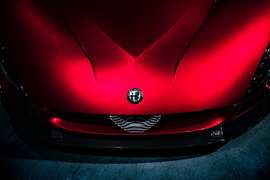
The Alfa Romeo Montreal houses a 2.6-liter V8 engine originally derived from Alfa’s Tipo 33 sports prototype – an endurance racer competing in events like the Targa Florio and the 24 Hours of Daytona. Though detuned for road use, the engine in the Montreal retains much of its motorsport character, revving up to 7,000 RPM and producing 200 horsepower. The roar of its V8, coupled with its sharp styling, made it one of the coolest and most underrated cars to ever carry Alfa’s badge.
Related: 10 Facts Everyone Should Know About Alfa Romeo
Here are 10 things you should know about one of the oldest automakers in the industry.
By: Gerhard Horn | April 27, 2024
Motorsport DNA and Production Cars: Real-World Performance
Now that we understand the strategic importance of motorsport to automakers, let’s explore some specific production vehicles that are powered by genuine motorsport engines.
The Alfa Romeo Montreal: A Road-Legal Endurance Racer
The Alfa Romeo Montreal is a prime example of a production car directly derived from a motorsport program. This iconic Italian sports car is powered by a 2.6-liter V8 engine that was originally developed for Alfa Romeo’s Tipo 33 sports prototype, an endurance racer that competed in legendary events such as the Targa Florio and the 24 Hours of Daytona.
Though tuned down to meet road-legal specifications, the engine in the Montreal retains much of the character that made its racing sibling so exciting. It revs up to a screaming 7,000 RPM and produces a respectable 200 horsepower. The distinctive howl of its V8, combined with the car’s sharp, distinctive styling, made the Montreal one of the most underrated and aesthetically pleasing vehicles to ever bear the Alfa Romeo badge. It offered drivers a visceral racing experience rarely found in production cars of its era.
The BMW M Series: Performance Born on the Track
BMW’s M division is synonymous with high-performance road cars that are deeply rooted in motorsport. From the legendary BMW M1 to the iconic M3 and the robust M5 and M6, BMW has consistently brought racing technology to the street.
The BMW M1, in particular, was powered by the M88 inline-six engine, a powerplant directly derived from the brand’s racing programs. This engine was specifically used in BMW’s exclusive M1 ProCar series, a thrilling one-make championship featuring production versions of the M1. The same M88 engine was later utilized in the E24 M6 and E28 M5, demonstrating BMW’s commitment to trickle-down technology.
Meanwhile, the BMW M3’s four-cylinder S14 engine was also based on the M88 architecture and the turbocharged M12 engines used in Formula 1. This engine was inspired by BMW’s touring car racing heritage, sharing components and engineering with the cars that dominated in DTM racing.
The Chevrolet Camaro ZL1: A Street Legal Drag Monster
The 1969 Chevrolet Camaro ZL1 is a legendary performance car that was originally designed for Can-Am racing. It features a 427 cubic-inch (7.0-liter) V8 engine that shares its DNA with the race-bred power plants used in the Can-Am series.
This all-aluminum engine was remarkably light for its displacement and produced a staggering amount of power. It was factory rated at 430 horsepower, but in reality, it was detuned from the 500 horsepower output of the racing version. The ZL1 package transformed the Camaro into a street-legal drag strip monster, and its engine continued to be used in various race cars in the SCCA Trans-Am series. With only 69 units ever produced, the Camaro ZL1 is one of the rarest and most sought-after muscle cars available today.
The Ferrari Dino 206 GT: A Formula 2 Successor
The Ferrari Dino 206 GT is renowned for its 2.0-liter V6 engine, which was originally developed for Ferrari’s Formula 2 cars in the 1960s. Although detuned for road use, the engine retained its high-revving nature, imbuing the Dino with a racing spirit that made it a joy to drive on winding roads.
It produced 180 horsepower, which was more than enough for a car that weighed just over 2,000 pounds. The Dino marked Ferrari’s first foray into mid-engine V6 sports cars, paving the way for future models. It was one of the few Ferraris that did not carry the Prancing Horse badge, making it a unique and historically significant vehicle in the marque’s rich legacy.
The Ferrari F50: A True Formula 1 Replica
The Ferrari F50 is an extraordinary vehicle that takes the concept of a track-derived engine to the absolute pinnacle. Created to celebrate the Italian marque’s 50th anniversary, the F50 is powered by a 4.7-liter V12 that is directly derived from Ferrari’s 1990 Formula 1 car, the Tipo 641, driven by the legendary Alain Prost.
This naturally aspirated monster revs to an exhilarating 8,500 RPM and produces 513 horsepower, bringing the raw, unfiltered feel of an F1 car to the road. With only minor modifications made to meet racing regulations, the F50 was the closest a road-legal Ferrari could get to Formula 1 at the time.
The Ford GT: A Homage to Le Mans
The Ford GT is an homage to one of the most legendary race cars of all time: the Le Mans-winning Ford GT40. The