
The Porsche 911 GT3 RS: Evolution of an Apex Predator
For over two decades, the Porsche 911 GT3 RS has stood as a towering testament to uncompromising track performance. It’s a machine born from a lineage of racing homologation specials, refined to extract every last millisecond from a circuit. As an industry veteran with a decade immersed in the automotive world, I’ve witnessed firsthand the evolution of this legendary model, from its foundational roots to the astonishing technological marvel it represents today. This isn’t just a car; it’s a statement of intent, a purist’s dream forged in the crucible of motorsport.
The story, as many enthusiasts know, truly began to crystallize with the 996 generation. While the initial 996 GT3 was widely lauded as the ultimate track-honed 911, thanks to its potent flat-six, stripped-back construction, and race-bred development, Porsche’s engineers, driven by an insatiable pursuit of perfection, saw further potential. They understood that “ultimate” was merely a benchmark, not a destination.
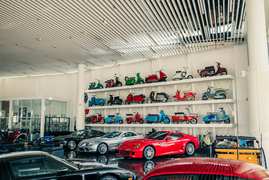
This unyielding drive for improvement manifested powerfully with the facelifted 996.2 GT3. Porsche, not content to rest on their laurels, took the GT3 and dialed it up. They meticulously shaved more weight, employing lighter wheels and body panels. The already formidable engine received a slight bump in horsepower, and subtle aerodynamic refinements were implemented. The result was the GT3 RS – a car so radically track-focused and race-derived that it rendered the standard GT3 comparatively mundane. For the subsequent twenty years, this iteration cemented its status as an undisputed icon at track days and enthusiast gatherings worldwide.
Fast forward to the current generation, the 992.1 variant of the Porsche 911 GT3 RS, and we see this track-focused ethos pushed to entirely new, almost unfathomable degrees of hardcore capability. This machine is a symphony of aerodynamic innovation and mechanical prowess. Its carbon fiber bonnet, a visual cue to its racing pedigree, features a central radiator flanked by “nostril” outlets designed to meticulously channel airflow over the roof, a concept often seen in top-tier motorsport. Further enhancing its aerodynamic agenda are a hydraulically adjustable front splitter and underbody flaps, technologies borrowed from the formidable Turbo S. Looming large at the rear is an enormous swan-neck rear wing, complete with a Drag Reduction System (DRS) – a feature strikingly reminiscent of Formula 1 machinery and hypercars like the McLaren P1.
The mechanical sophistication extends throughout the chassis. The 992.1 GT3 RS boasts adjustable, race-derived suspension systems, allowing for granular tuning to suit specific track conditions and driver preferences. Dynamic engine mounts ensure optimal power delivery and responsiveness under extreme G-forces. Large air intakes dominate the visual landscape, feeding vital cool air to the engine and braking systems, while aggressive side skirts contribute to aerodynamic efficiency. At its heart lies a commanding 4.0-liter naturally aspirated Flat-6 engine, churning out a staggering 525 horsepower. The culmination of these engineering marvels is breathtaking: a 0-62 mph sprint completed in a mere 3.2 seconds, a colossal 860 kilograms of downforce generated at 177 mph, and a blistering Nürburgring lap time of 6:44.85. To put it into perspective, this car is as far removed from a standard 911 as an eagle is from a humble swallow.
The Specter of the 992.2: Evolution or Revolution?
Recent photographic evidence, captured during rigorous testing at the Nürburgring, offers tantalizing glimpses of the upcoming, facelifted Porsche 911 GT3 RS 992.2. As is customary with every new generation of the 911, the visual alterations are subtle, a testament to the enduring design purity of the iconic silhouette. Spy shots reveal a car that largely retains the familiar, aggressive stance of its predecessor. We see the continuation of the central radiator with its distinctive “nostril” outlets, the imposing swan-neck rear wing now equipped with DRS, the substantial air intakes, and the purposeful side skirts. Even the door handles appear to carry over, a subtle nod to the continuity of the design language.
One notable detail observed is the inclusion of lower-mounted turn signals, a design element that was omitted from many standard 992.2 models, which integrated their indicators into the headlight clusters. The rear diffuser has also undergone a slight redesign, now featuring subtle, small intakes positioned on either side of the central exhaust pipes. While it remains to be seen whether the 992.2 GT3 RS will adopt the digital dashboard that has become a hallmark of the broader 992.2 range, the overall impression is that of the same formidable, brutally effective track machine that the GT3 RS has always been.
The automotive rumor mill, fueled by the extensive powertrain updates across the 992.2 lineup, has been abuzz with speculation. The most prevalent theory suggests that the new GT3 RS might incorporate the 3.6-liter twin-turbo hybrid Flat-6 powertrain that has been generating significant buzz within the 992.2 family. Such an integration would undoubtedly propel the power output well beyond that of the current 4.0-liter naturally aspirated unit.
However, based on my experience and understanding of Porsche’s strategic positioning, I am inclined to believe this hybridization is unlikely for the GT3 RS. My reasoning is multifaceted. Firstly, if Porsche’s intention was to standardize the hybrid powertrain across its performance-oriented 911 models, it stands to reason that it would have been introduced in the standard GT3 first, a move that has not occurred. This suggests a deliberate differentiation strategy.
Secondly, while the engineering wizards at Stuttgart have undoubtedly achieved remarkable feats in optimizing the hybrid unit, it is an undeniable fact that any hybrid system inherently adds weight compared to a purely combustion-driven counterpart. For a model like the GT3 RS, where weight reduction is paramount and every gram is scrutinized for performance gains, introducing additional mass would be considered almost sacrilegious to its core ethos.
But perhaps most critically, fitting a hybrid system purely for the sake of increased power output risks diluting the very spirit that defines the GT3 RS. At their fundamental core, both the GT3 and the GT3 RS are purpose-built track-focused sports cars, engineered to deliver an exhilarating, visceral driving experience. They are designed to thrill and engage the driver, not merely to be hypercars solely focused on breaking lap records.
That particular domain, the realm of outright record-breaking performance, is more likely to be the purview of the anticipated GT2 RS. This higher-tier model is almost certainly where we will see the integration of the more potent 3.6-liter hybrid Flat-6. Ultimately, Porsche’s astute understanding of its GT3 RS customer base dictates a commitment to delivering the purest, most mechanically engaging, and track-honed thrill machine available. Any deviation from its naturally aspirated 4.0-liter Flat-6, especially considering the distinct possibility that this engine could be enjoying its swan song in this generation, would feel fundamentally incorrect. This engine has become synonymous with the GT3 RS experience, a mechanical masterpiece that delivers its power with an unparalleled linear response and a soul-stirring soundtrack.
Navigating a Shifting Landscape: The Competitive Arena
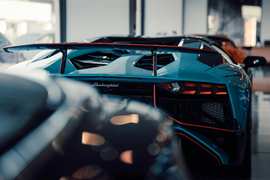
The automotive landscape is constantly evolving, and the arrival of formidable competitors only serves to underscore the enduring brilliance of the Porsche 911 GT3 RS performance. Recently, Mercedes-AMG has unveiled spy shots of its new track-focused AMG GT, a machine poised to vie for supremacy against either the GT3 RS or the forthcoming GT2 RS. While the initial glimpses suggest a visually impressive and potentially potent contender, there’s an undeniable truth: to truly rival the established benchmark of the GT3 RS, it would need to come with a complimentary rocket attached.
There is a profound reason why the GT3 RS has maintained its reign for two decades. It’s a testament to Porsche’s unwavering dedication to a specific philosophy of performance. And as the automotive industry increasingly embraces electrification and hybridization, the prospect of this current generation representing the final chapter for the naturally aspirated Flat-6 in the RS lineage is a poignant one. If this indeed is the swan song, it promises to be a glorious send-off, a roaring, thunderous exclamation point on an era of pure, unadulterated mechanical exhilaration. The Porsche 911 GT3 RS price reflects its exclusivity and engineering prowess, positioning it as a highly sought-after vehicle for collectors and performance enthusiasts alike, with specific Porsche 911 GT3 RS for sale listings often commanding significant premiums in major markets like Los Angeles and Miami.
The Unyielding Allure of the Naturally Aspirated
The debate surrounding the ideal powertrain for a track-focused supercar is a passionate one. While the allure of hybrid power and its instantaneous torque delivery is undeniable, for a car like the GT3 RS, the character and connection provided by a high-revving, naturally aspirated engine remain unmatched. The linearity of power delivery, the visceral feedback through the chassis, and the unfiltered auditory experience are crucial elements that contribute to the driver’s engagement and the car’s overall thrill factor. The 4.0-liter engine in the current GT3 RS is a masterpiece of internal combustion engineering, delivering its power with a ferocity and a soundtrack that simply cannot be replicated by forced induction or electric assistance in the same way.
Furthermore, the engineering purity of a naturally aspirated engine aligns perfectly with the GT3 RS’s mission statement: to be the most focused, analog driving experience on the market. This commitment to a purist philosophy is what attracts a dedicated following of drivers who value mechanical feel and driver input above all else. When considering Porsche 911 GT3 RS lease options or searching for used Porsche 911 GT3 RS models, prospective buyers are often drawn by this very essence.
The Future of Track Dominance
As we look towards the horizon, the question of what comes next for the Porsche 911 GT3 RS is one that excites and intrigues. While the 992.2 generation may see subtle evolutionary changes, the fundamental principles that have defined this model for over two decades are likely to remain sacrosanct. The relentless pursuit of aerodynamic efficiency, the meticulous reduction of weight, and the unwavering commitment to providing an unparalleled driver connection will continue to be the cornerstones of its development.
The integration of advanced driver-assistance systems, while sophisticated, must be carefully balanced to ensure they enhance, rather than detract from, the raw driving experience. For the dedicated GT3 RS enthusiast, the joy lies in the direct interaction with the machine, the subtle nuances of chassis feedback, and the pure exhilaration of pushing its limits.
The market for these high-performance vehicles remains robust, with significant interest from enthusiasts in regions such as New York and Chicago, where demand for premium sports cars is consistently high. Whether seeking a new Porsche 911 GT3 RS or exploring Porsche 911 GT3 RS deals, the core appeal remains the same: an uncompromising dedication to track performance and an enduring legacy of automotive excellence.
The Porsche 911 GT3 RS is more than just a car; it’s a cultural icon, a benchmark against which all other track-focused sports cars are measured. Its continued evolution, while adapting to technological advancements, is driven by a deep understanding of what makes it so special. It’s a machine that rewards skill, demands respect, and delivers an experience that is both breathtaking and profoundly rewarding.
Are you ready to experience the pinnacle of track-focused automotive engineering for yourself? Explore the current offerings and discover the legacy of the Porsche 911 GT3 RS.