



The Prancing Horse’s Electrifying Evolution: A Deep Dive into the Ferrari 296 GTB 2025
As an industry veteran with a decade immersed in the automotive world, I’ve witnessed firsthand the relentless march of
technological innovation and performance enhancement. Today, the supercar landscape is being fundamentally reshaped, and at the forefront of this transformation stands the Ferrari 296 GTB. This isn’t just another iteration of an iconic marque; it’s a bold leap into a new era, a testament to Maranello’s unwavering commitment to pushing boundaries. While rivals like the highly anticipated Lamborghini Temerario are poised to challenge, the 296 GTB has already established a formidable benchmark, redefining what a hybrid supercar can and should be.
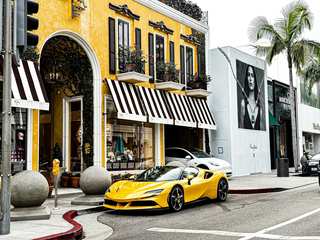 The arrival of the Ferrari 296 GTB in 2022 marked a pivotal moment for the Italian marque. For the first time in decades, the signature V8 engine was relinquished in favor of a revolutionary twin-turbocharged V6, augmented by an advanced electric powertrain. This strategic shift placed the 296 GTB firmly ahead of the curve in a segment that, at the time, was only beginning to embrace electrification. While traditional competitors like the Lamborghini Huracán, with its sonorous naturally aspirated V10, and the formidable McLaren 720S, powered by a robust twin-turbo V8, offered their own distinct appeals, the 296 GTB presented a compellingly modern interpretation of supercar performance. Now, with the specter of the 903bhp, 10,000rpm hybrid Temerario looming, the 296 GTB’s innovative formula is more relevant than ever, serving as a direct counterpoint to Maranello’s hybrid masterpiece.
The sheer potency of the Ferrari 296 GTB is undeniable. Its heart is an all-new 120-degree, twin-turbo V6 engine, meticulously engineered to work in concert with a sophisticated electric motor. Unlike its stablemate, the SF90 Stradale, which distributes power across all four wheels, the 296 GTB channels its 819 horsepower exclusively to the rear, creating a purer, more focused driving experience. This configuration shattered preconceived notions of what a V6-powered Ferrari could achieve, proving that downsizing and electrification could deliver not just efficiency, but exhilarating performance. The ongoing discussion about the ultimate limits of power escalation in supercars is certainly a pertinent one, and the 296 GTB’s impressive figures only fuel this debate, prompting enthusiasts to ponder where such prodigious performance can be fully unleashed.
Beyond its headline-grabbing power output, the 296 GTB carries significant historical weight. It is the first V6-powered road-legal Ferrari to bear the iconic Prancing Horse emblem, a lineage tracing back to the beloved, albeit unofficially badged, 246 GT Dino. Furthermore, it pioneers the “hot-vee” turbocharger layout within a Ferrari road car, a design that optimises packaging and response. As a plug-in hybrid, it offers an electric-only range of approximately 15 miles, providing a tantalizing glimpse into silent, emission-free driving. The compact V6 is nestled low within a newly developed aluminum chassis, its wheelbase judiciously reduced by 50mm compared to its V8 predecessors, allowing for a slightly forward-shifted occupant position, enhancing the car’s dynamic center.
The electric motor itself contributes a significant 165 horsepower and 232 lb-ft of torque to the equation. The V6, in isolation, is a marvel of engineering, producing a breathtaking 654 horsepower and 546 lb-ft of torque. While Ferrari wisely refrains from quoting a combined peak torque figure, acknowledging the complex interplay between the ICE and electric motor, it’s safe to assume the resulting figure is nothing short of monumental. This innovative powertrain strategy also yields a weight saving of approximately 30kg over comparable V8 engines. Mated to an eight-speed dual-clutch transmission and featuring a long, rectangular battery pack situated behind the seats, the 296 GTB is a testament to intelligent packaging and groundbreaking engineering.
No Ferrari would be complete without an arsenal of cutting-edge electronic chassis management systems. The 296 GTB introduces the six-axis sensor known as 6w-CDS (Chassis Dynamic Sensor), an advancement that meticulously monitors acceleration and rotational velocity across the X, Y, and Z planes. This sophisticated sensor replaces traditional yaw sensors and, in conjunction with a steering rack-mounted unit, provides an unprecedented understanding of driver inputs and instantaneous grip levels at the tire contact patch. This data is then fed into systems like Side Slip Control and the active E-Diff, working in unison to maximize cornering speeds while preserving unwavering stability and driver confidence. A standout innovation enabled by this system is ABS-evo, a next-generation anti-lock braking system that, in RACE mode and above, leverages the 296’s brake-by-wire technology to not only shorten braking distances but also enhance braking performance during trail-braking maneuvers into corners, a crucial technique for maximizing lap times.
For the first time in a Ferrari road car, active aerodynamics are deployed not to reduce drag, but to generate significant downforce. The rear wing, which elegantly deploys from the rear deck, contributes up to 100kg of the quoted 360kg of downforce at 155mph. The cooling architecture is equally impressive. Two radiators in the front handle engine and gearbox cooling, supplemented by two additional condensers for the battery pack. Hot air is strategically expelled from the underbody to avoid disrupting the airflow directed towards the intercoolers positioned along the car’s flanks. Small apertures below the headlamps are dedicated to cooling the brakes, while a rear roofline-integrated wing works in conjunction with the bodywork to create a “virtual” rear screen, effectively channeling air towards the rear of the car. The majority of the 296’s substantial downforce, however, is generated beneath the car, with meticulous attention paid to the underbody’s aerodynamic profiling and its ground clearance to maximize the effectiveness of these downforce-generating surfaces.
Our initial experiences with the 296 GTB on track were exclusively with the optional Assetto Fiorano package. This performance-oriented upgrade replaces the standard dampers with sophisticated Multimatic units, directly derived from GT racing technology. It also incorporates additional carbon fiber aerodynamic elements on the front end, contributing an extra 20kg of downforce. The pursuit of weight reduction extends to the interior and exterior, with more carbon fiber applications, including door panels, resulting in a further 12kg saving. Opting for the Lexan rear engine cover shaves off an additional 3kg. For the ultimate track-focused setup, the Assetto Fiorano package allows for the specification of Michelin Pilot Sport Cup 2 R tires, replacing the already capable standard Pilot Sport 4S. Visually, Fiorano-equipped cars can be further distinguished by an exterior graphics package, artfully inspired by the legendary 250LM of the 1960s. Having spent considerable time with the 296 GTB in person, its aesthetic is undeniably captivating, offering a distinct and refreshing departure from anything else on the road, with echoes of the iconic 250LM even without the more polarizing graphic options.
Initiating forward motion in the 296 GTB is a simple affair: a double press on the lower section of the steering wheel boss, followed by selecting first gear. The car defaults to Hybrid mode, utilizing electric power for initial propulsion unless deliberately overridden by the driver via the intuitive haptic controls integrated into the steering wheel. With judicious throttle application, the 296 can glide silently through urban environments, a surprisingly serene experience for a supercar, its sophisticated damping making it a remarkably comfortable companion for longer journeys. The “frunk” offers a respectable amount of luggage space, a welcome practicality often absent in its more performance-oriented rivals. However, the true magic of the 296 GTB is revealed when both the V6 engine and electric motor are unleashed.
The instantaneous surge of acceleration is nothing short of astonishing. Applying full throttle from low revs in a higher gear results in an immediate and relentless surge forward, rendering the notion of gear selection almost secondary in its potency. Yet, with eight gears at its disposal and an engine that enthusiastically revs to 8500rpm, the full exploitation of the powertrain delivers a truly electrifying experience. The numbers speak for themselves: a sub-3-second 0-62mph sprint and a top speed exceeding 205mph translate to acceleration that verges on the overwhelming, eliciting a mixture of nervous laughter and sheer exhilaration. This is a car that demands your full attention, and it rewards it with an addictive sensation of speed. The auditory experience is equally captivating, with a symphony of turbocharger whines harmonizing with the tuneful rasp of the V6.
The true brilliance of the Ferrari 296 GTB lies in its chassis dynamics. The responsiveness is exceptional, and Ferrari’s commitment to making this car “fun to drive” is palpable. It exhibits a level of agility that is both exhilarating and confidence-inspiring, never tipping over into nervousness. The steering is typically light and rapid, yet it communicates a surprising amount of road feel, allowing the driver to precisely gauge available grip. While grip levels are predictably immense, the car remains remarkably throttle-adjustable, encouraging playful engagement and eliciting genuine smiles.
Despite its dry weight of 1470kg, the 296 GTB feels significantly lighter, possessing a fluidity and lack of inertia that encourages intuitive inputs and rewards precision. The CT Off mode offers a safety net of electronic oversight, but even with all systems disengaged, the inherent balance of the 296 allows for controlled oversteer, a testament to its sophisticated engineering. On a race track, the 296 GTB has the remarkable ability to seemingly shrink the longest straights. It acts as a razor-sharp instrument, capable of breaking traction at numerous points around a lap, yet it remains acutely sensitive to braking and steering inputs, rewarding precise control with amplified performance. The turn-in accuracy and immediate response dramatically shorten the entry phase of every corner. Instead of easing into turns, the 296 attacks them, its Multimatic dampers and hyper-quick steering working in perfect synergy with the enhanced body control provided by the Assetto Fiorano setup. Even for a driver accustomed to more mature sports cars, the sheer speed, precision, and agility of the 296 GTB are nothing short of phenomenal, offering an intoxicating experience lap after lap.
The arrival of the Ferrari 296 GTB in 2022 marked a pivotal moment for the Italian marque. For the first time in decades, the signature V8 engine was relinquished in favor of a revolutionary twin-turbocharged V6, augmented by an advanced electric powertrain. This strategic shift placed the 296 GTB firmly ahead of the curve in a segment that, at the time, was only beginning to embrace electrification. While traditional competitors like the Lamborghini Huracán, with its sonorous naturally aspirated V10, and the formidable McLaren 720S, powered by a robust twin-turbo V8, offered their own distinct appeals, the 296 GTB presented a compellingly modern interpretation of supercar performance. Now, with the specter of the 903bhp, 10,000rpm hybrid Temerario looming, the 296 GTB’s innovative formula is more relevant than ever, serving as a direct counterpoint to Maranello’s hybrid masterpiece.
The sheer potency of the Ferrari 296 GTB is undeniable. Its heart is an all-new 120-degree, twin-turbo V6 engine, meticulously engineered to work in concert with a sophisticated electric motor. Unlike its stablemate, the SF90 Stradale, which distributes power across all four wheels, the 296 GTB channels its 819 horsepower exclusively to the rear, creating a purer, more focused driving experience. This configuration shattered preconceived notions of what a V6-powered Ferrari could achieve, proving that downsizing and electrification could deliver not just efficiency, but exhilarating performance. The ongoing discussion about the ultimate limits of power escalation in supercars is certainly a pertinent one, and the 296 GTB’s impressive figures only fuel this debate, prompting enthusiasts to ponder where such prodigious performance can be fully unleashed.
Beyond its headline-grabbing power output, the 296 GTB carries significant historical weight. It is the first V6-powered road-legal Ferrari to bear the iconic Prancing Horse emblem, a lineage tracing back to the beloved, albeit unofficially badged, 246 GT Dino. Furthermore, it pioneers the “hot-vee” turbocharger layout within a Ferrari road car, a design that optimises packaging and response. As a plug-in hybrid, it offers an electric-only range of approximately 15 miles, providing a tantalizing glimpse into silent, emission-free driving. The compact V6 is nestled low within a newly developed aluminum chassis, its wheelbase judiciously reduced by 50mm compared to its V8 predecessors, allowing for a slightly forward-shifted occupant position, enhancing the car’s dynamic center.
The electric motor itself contributes a significant 165 horsepower and 232 lb-ft of torque to the equation. The V6, in isolation, is a marvel of engineering, producing a breathtaking 654 horsepower and 546 lb-ft of torque. While Ferrari wisely refrains from quoting a combined peak torque figure, acknowledging the complex interplay between the ICE and electric motor, it’s safe to assume the resulting figure is nothing short of monumental. This innovative powertrain strategy also yields a weight saving of approximately 30kg over comparable V8 engines. Mated to an eight-speed dual-clutch transmission and featuring a long, rectangular battery pack situated behind the seats, the 296 GTB is a testament to intelligent packaging and groundbreaking engineering.
No Ferrari would be complete without an arsenal of cutting-edge electronic chassis management systems. The 296 GTB introduces the six-axis sensor known as 6w-CDS (Chassis Dynamic Sensor), an advancement that meticulously monitors acceleration and rotational velocity across the X, Y, and Z planes. This sophisticated sensor replaces traditional yaw sensors and, in conjunction with a steering rack-mounted unit, provides an unprecedented understanding of driver inputs and instantaneous grip levels at the tire contact patch. This data is then fed into systems like Side Slip Control and the active E-Diff, working in unison to maximize cornering speeds while preserving unwavering stability and driver confidence. A standout innovation enabled by this system is ABS-evo, a next-generation anti-lock braking system that, in RACE mode and above, leverages the 296’s brake-by-wire technology to not only shorten braking distances but also enhance braking performance during trail-braking maneuvers into corners, a crucial technique for maximizing lap times.
For the first time in a Ferrari road car, active aerodynamics are deployed not to reduce drag, but to generate significant downforce. The rear wing, which elegantly deploys from the rear deck, contributes up to 100kg of the quoted 360kg of downforce at 155mph. The cooling architecture is equally impressive. Two radiators in the front handle engine and gearbox cooling, supplemented by two additional condensers for the battery pack. Hot air is strategically expelled from the underbody to avoid disrupting the airflow directed towards the intercoolers positioned along the car’s flanks. Small apertures below the headlamps are dedicated to cooling the brakes, while a rear roofline-integrated wing works in conjunction with the bodywork to create a “virtual” rear screen, effectively channeling air towards the rear of the car. The majority of the 296’s substantial downforce, however, is generated beneath the car, with meticulous attention paid to the underbody’s aerodynamic profiling and its ground clearance to maximize the effectiveness of these downforce-generating surfaces.
Our initial experiences with the 296 GTB on track were exclusively with the optional Assetto Fiorano package. This performance-oriented upgrade replaces the standard dampers with sophisticated Multimatic units, directly derived from GT racing technology. It also incorporates additional carbon fiber aerodynamic elements on the front end, contributing an extra 20kg of downforce. The pursuit of weight reduction extends to the interior and exterior, with more carbon fiber applications, including door panels, resulting in a further 12kg saving. Opting for the Lexan rear engine cover shaves off an additional 3kg. For the ultimate track-focused setup, the Assetto Fiorano package allows for the specification of Michelin Pilot Sport Cup 2 R tires, replacing the already capable standard Pilot Sport 4S. Visually, Fiorano-equipped cars can be further distinguished by an exterior graphics package, artfully inspired by the legendary 250LM of the 1960s. Having spent considerable time with the 296 GTB in person, its aesthetic is undeniably captivating, offering a distinct and refreshing departure from anything else on the road, with echoes of the iconic 250LM even without the more polarizing graphic options.
Initiating forward motion in the 296 GTB is a simple affair: a double press on the lower section of the steering wheel boss, followed by selecting first gear. The car defaults to Hybrid mode, utilizing electric power for initial propulsion unless deliberately overridden by the driver via the intuitive haptic controls integrated into the steering wheel. With judicious throttle application, the 296 can glide silently through urban environments, a surprisingly serene experience for a supercar, its sophisticated damping making it a remarkably comfortable companion for longer journeys. The “frunk” offers a respectable amount of luggage space, a welcome practicality often absent in its more performance-oriented rivals. However, the true magic of the 296 GTB is revealed when both the V6 engine and electric motor are unleashed.
The instantaneous surge of acceleration is nothing short of astonishing. Applying full throttle from low revs in a higher gear results in an immediate and relentless surge forward, rendering the notion of gear selection almost secondary in its potency. Yet, with eight gears at its disposal and an engine that enthusiastically revs to 8500rpm, the full exploitation of the powertrain delivers a truly electrifying experience. The numbers speak for themselves: a sub-3-second 0-62mph sprint and a top speed exceeding 205mph translate to acceleration that verges on the overwhelming, eliciting a mixture of nervous laughter and sheer exhilaration. This is a car that demands your full attention, and it rewards it with an addictive sensation of speed. The auditory experience is equally captivating, with a symphony of turbocharger whines harmonizing with the tuneful rasp of the V6.
The true brilliance of the Ferrari 296 GTB lies in its chassis dynamics. The responsiveness is exceptional, and Ferrari’s commitment to making this car “fun to drive” is palpable. It exhibits a level of agility that is both exhilarating and confidence-inspiring, never tipping over into nervousness. The steering is typically light and rapid, yet it communicates a surprising amount of road feel, allowing the driver to precisely gauge available grip. While grip levels are predictably immense, the car remains remarkably throttle-adjustable, encouraging playful engagement and eliciting genuine smiles.
Despite its dry weight of 1470kg, the 296 GTB feels significantly lighter, possessing a fluidity and lack of inertia that encourages intuitive inputs and rewards precision. The CT Off mode offers a safety net of electronic oversight, but even with all systems disengaged, the inherent balance of the 296 allows for controlled oversteer, a testament to its sophisticated engineering. On a race track, the 296 GTB has the remarkable ability to seemingly shrink the longest straights. It acts as a razor-sharp instrument, capable of breaking traction at numerous points around a lap, yet it remains acutely sensitive to braking and steering inputs, rewarding precise control with amplified performance. The turn-in accuracy and immediate response dramatically shorten the entry phase of every corner. Instead of easing into turns, the 296 attacks them, its Multimatic dampers and hyper-quick steering working in perfect synergy with the enhanced body control provided by the Assetto Fiorano setup. Even for a driver accustomed to more mature sports cars, the sheer speed, precision, and agility of the 296 GTB are nothing short of phenomenal, offering an intoxicating experience lap after lap.
 The interior architecture of the 296 GTB will be instantly recognizable to anyone familiar with the SF90 Stradale, as it adopts much of that car’s design philosophy. The fully digital interface and its accompanying haptic switchgear, liberally distributed across the steering wheel and surrounding pods, present a notable learning curve. While the complexity is understandable given the wealth of information and control functions, the execution can be frustrating. Simple operations sometimes require multiple attempts to register, and it’s not always clear whether a command has been successfully executed. Despite these usability challenges, the cabin undeniably exudes a special atmosphere, befitting a Ferrari.
Our 2022 Evo Car of the Year assessment highlighted the razor-thin margins separating the contenders. The Ferrari 296 GTB and the McLaren Artura were separated by a mere “fag paper,” with the judges themselves evenly split in their preference. Those who favored the Ferrari, including myself, were captivated by its “spectacular” nature. Jethro Bovingdon lauded its beauty, outrageous speed, exploitable performance, and technical brilliance, noting that its V6 demonstrated how to downsize effectively while amplifying drama. He felt it matched the Artura in sheer control but offered a more playful and indulgent experience.
Dickie Meaden declared it “the first genuinely beautiful Ferrari since the F355,” a sentiment echoed by many. He praised the seamless integration of the hybrid system, noting it didn’t detract from the driving experience as much as feared, perhaps due to the familiarity of turbocharged torque from the 488 and F8. He described the 296 as “stonkingly quick” but emphasized that its appeal extended beyond mere speed, citing the V6’s character and a soundtrack that remained engaging across the throttle range.
While the hybrid system’s seamless integration was widely applauded, a notable incident saw the battery deplete, leaving a car stranded. Ferrari had issued warnings about potential scenarios and preventative measures, but the possibility of an owner facing a similar predicament is not inconceivable. Gallagher pointed out the oversight of a company renowned for advanced engineering not implementing a simple fail-safe to prevent such an issue. Fortunately for the 296, this occurred after all scoring was complete.
Ferrari’s signature ultra-quick steering divided opinions, and the brake pedal feel didn’t quite match the very best in the group. The technological interface also faced widespread criticism for its complexity. Despite these points, the 296 remained “irresistibly seductive.” Vivian expressed initial skepticism about the Ferrari’s complexity but admitted to being “bewitched” by its uncanny directional changes, remarkable damping, incredible grip, and the linearity of its seemingly endless power delivery.
Peter Tomalin, reflecting on the 2022 awards, noted the 296 GTB’s success compared to the SF90, stating, “The 296 is way more successful because its technical sophistication, and the integration of its hybrid technology in particular, feels much more natural, and far less intrusive.” Gallagher concurred, adding, “Ferrari has taken so much from the SF90, learnt from that car and distilled it into a series production model that’s one of its very best.”
With such a high level of technological integration, there’s always a risk of a car becoming less than the sum of its parts, a sentiment we experienced with the SF90, which, despite its dazzling power, felt somewhat aloof. The 296 GTB, however, strikes a profoundly different chord. Its arrival at the 2022 Evo Car of the Year awards, where it secured joint third place with the McLaren Artura, underscored its organic feel. The harmonious blend of its prodigious power and engaging dynamics creates a compelling sweet spot, effectively redefining the expectations for a supercar in the $250,000 price bracket. Rumors of a “Versione Speciale” variant with even greater performance and intensity are circulating, and the hope is that the standard 296’s remarkably natural driving character will be preserved.
It is this core aspect of the 296 GTB’s character that we hope Lamborghini has meticulously addressed in the development of its hybrid Temerario supercar. Over 900 horsepower is an almost obscene amount of power to harness in a production supercar, and without a perfectly resolved chassis to match, it could easily become overwhelming. Given the remarkable achievement of the Revuelto, there is ample reason for optimism that the Temerario will deliver a compelling performance. If Lamborghini has indeed achieved a similar level of dynamic prowess, we could be on the cusp of an epic twin-test, pitting two titans against each other.
Alternatively, we could even expand this to a 2400bhp triple-threat, incorporating the McLaren 750S. While now seemingly the “minnow” of the group with “only” 740 horsepower, it compensates with a remarkably light kerb weight of 1389kg, ensuring a competitive power-to-weight ratio. The McLaren’s raw engagement, ergonomic perfection, crisp steering, and sublime chassis finesse offer a contrasting, perhaps more immediate, connection to the road compared to the comparatively more remote feel of the Ferrari.
The Ferrari 296 GTB represents a significant milestone in the evolution of the supercar. Its innovative V6 hybrid powertrain, coupled with an exceptionally agile chassis and striking design, sets a new standard for performance and driver engagement. While the automotive landscape continues to evolve at a breakneck pace, the 296 GTB stands as a testament to Ferrari’s enduring legacy of engineering excellence and its fearless embrace of the future.
The interior architecture of the 296 GTB will be instantly recognizable to anyone familiar with the SF90 Stradale, as it adopts much of that car’s design philosophy. The fully digital interface and its accompanying haptic switchgear, liberally distributed across the steering wheel and surrounding pods, present a notable learning curve. While the complexity is understandable given the wealth of information and control functions, the execution can be frustrating. Simple operations sometimes require multiple attempts to register, and it’s not always clear whether a command has been successfully executed. Despite these usability challenges, the cabin undeniably exudes a special atmosphere, befitting a Ferrari.
Our 2022 Evo Car of the Year assessment highlighted the razor-thin margins separating the contenders. The Ferrari 296 GTB and the McLaren Artura were separated by a mere “fag paper,” with the judges themselves evenly split in their preference. Those who favored the Ferrari, including myself, were captivated by its “spectacular” nature. Jethro Bovingdon lauded its beauty, outrageous speed, exploitable performance, and technical brilliance, noting that its V6 demonstrated how to downsize effectively while amplifying drama. He felt it matched the Artura in sheer control but offered a more playful and indulgent experience.
Dickie Meaden declared it “the first genuinely beautiful Ferrari since the F355,” a sentiment echoed by many. He praised the seamless integration of the hybrid system, noting it didn’t detract from the driving experience as much as feared, perhaps due to the familiarity of turbocharged torque from the 488 and F8. He described the 296 as “stonkingly quick” but emphasized that its appeal extended beyond mere speed, citing the V6’s character and a soundtrack that remained engaging across the throttle range.
While the hybrid system’s seamless integration was widely applauded, a notable incident saw the battery deplete, leaving a car stranded. Ferrari had issued warnings about potential scenarios and preventative measures, but the possibility of an owner facing a similar predicament is not inconceivable. Gallagher pointed out the oversight of a company renowned for advanced engineering not implementing a simple fail-safe to prevent such an issue. Fortunately for the 296, this occurred after all scoring was complete.
Ferrari’s signature ultra-quick steering divided opinions, and the brake pedal feel didn’t quite match the very best in the group. The technological interface also faced widespread criticism for its complexity. Despite these points, the 296 remained “irresistibly seductive.” Vivian expressed initial skepticism about the Ferrari’s complexity but admitted to being “bewitched” by its uncanny directional changes, remarkable damping, incredible grip, and the linearity of its seemingly endless power delivery.
Peter Tomalin, reflecting on the 2022 awards, noted the 296 GTB’s success compared to the SF90, stating, “The 296 is way more successful because its technical sophistication, and the integration of its hybrid technology in particular, feels much more natural, and far less intrusive.” Gallagher concurred, adding, “Ferrari has taken so much from the SF90, learnt from that car and distilled it into a series production model that’s one of its very best.”
With such a high level of technological integration, there’s always a risk of a car becoming less than the sum of its parts, a sentiment we experienced with the SF90, which, despite its dazzling power, felt somewhat aloof. The 296 GTB, however, strikes a profoundly different chord. Its arrival at the 2022 Evo Car of the Year awards, where it secured joint third place with the McLaren Artura, underscored its organic feel. The harmonious blend of its prodigious power and engaging dynamics creates a compelling sweet spot, effectively redefining the expectations for a supercar in the $250,000 price bracket. Rumors of a “Versione Speciale” variant with even greater performance and intensity are circulating, and the hope is that the standard 296’s remarkably natural driving character will be preserved.
It is this core aspect of the 296 GTB’s character that we hope Lamborghini has meticulously addressed in the development of its hybrid Temerario supercar. Over 900 horsepower is an almost obscene amount of power to harness in a production supercar, and without a perfectly resolved chassis to match, it could easily become overwhelming. Given the remarkable achievement of the Revuelto, there is ample reason for optimism that the Temerario will deliver a compelling performance. If Lamborghini has indeed achieved a similar level of dynamic prowess, we could be on the cusp of an epic twin-test, pitting two titans against each other.
Alternatively, we could even expand this to a 2400bhp triple-threat, incorporating the McLaren 750S. While now seemingly the “minnow” of the group with “only” 740 horsepower, it compensates with a remarkably light kerb weight of 1389kg, ensuring a competitive power-to-weight ratio. The McLaren’s raw engagement, ergonomic perfection, crisp steering, and sublime chassis finesse offer a contrasting, perhaps more immediate, connection to the road compared to the comparatively more remote feel of the Ferrari.
The Ferrari 296 GTB represents a significant milestone in the evolution of the supercar. Its innovative V6 hybrid powertrain, coupled with an exceptionally agile chassis and striking design, sets a new standard for performance and driver engagement. While the automotive landscape continues to evolve at a breakneck pace, the 296 GTB stands as a testament to Ferrari’s enduring legacy of engineering excellence and its fearless embrace of the future.
 This extraordinary machine beckons the discerning enthusiast to experience its unique blend of power, precision, and passion. If you’re ready to witness the future of supercar performance firsthand and explore what it truly means to drive a modern icon, we invite you to connect with us for a personalized consultation and to discover how you can get behind the wheel of the Ferrari 296 GTB.